Drains and grease lines
Kept clear on an interval before they back up, the detail of which is our commercial drain maintenance work, so a blocked line never closes the business mid-service.

Woburn, MA · Commercial
A building has plumbing, drains, hot water, gas, and heating, and most owners manage them as five separate emergencies waiting to happen. A preventative maintenance program bundles them into one schedule with one accountable vendor. Prime Plumbing runs whole-property maintenance programs for businesses and buildings across Woburn and Greater Boston. Call (617) 354-4545.
One program instead of five problems
The systems that keep a building running are usually managed as if unrelated, each ignored until it fails. A program folds them onto one coordinated schedule, each serviced on the interval it needs.
Kept clear on an interval before they back up, the detail of which is our commercial drain maintenance work, so a blocked line never closes the business mid-service.
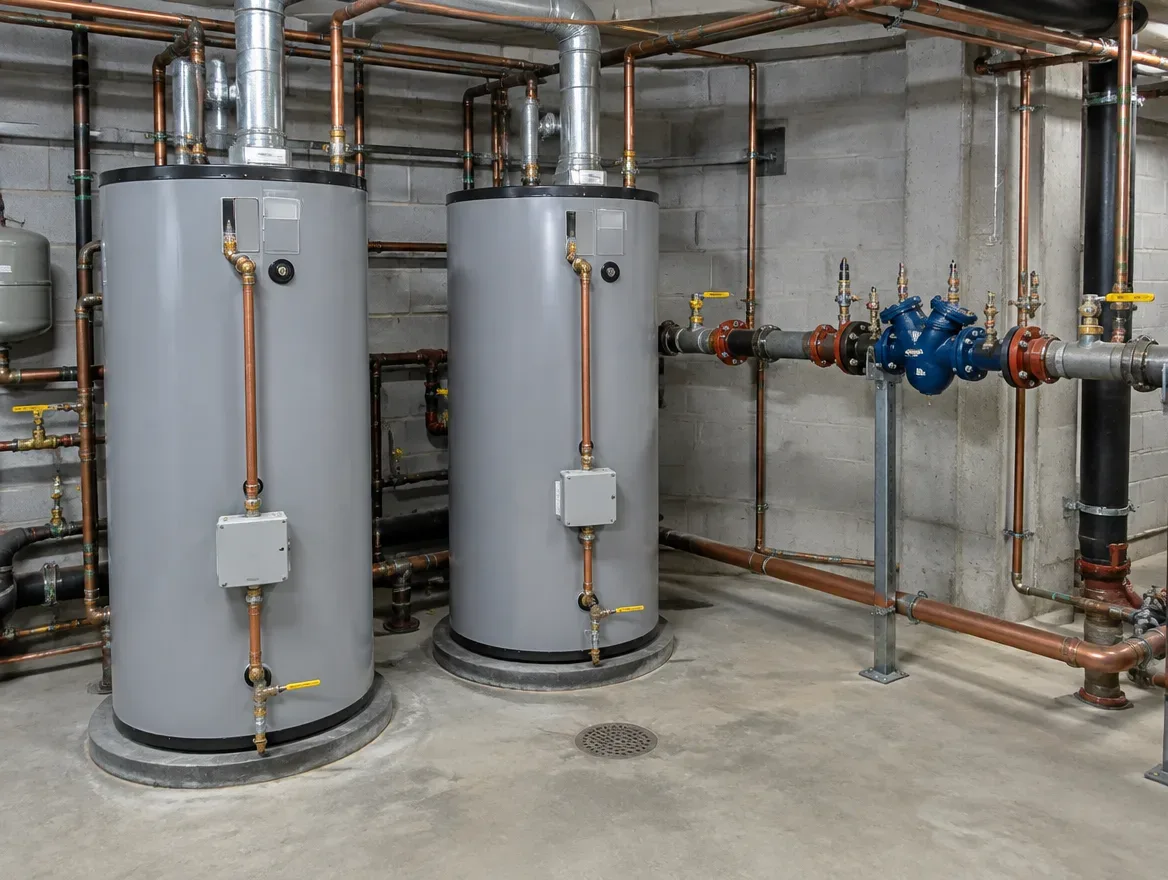
Fixtures kept working and not wasting water, backflow certification tracked and filed, and the water heating checked before it fails and leaves the building without hot water.
The heating system and any shared boiler readied before the season so a January failure does not leave the building cold, and the gas kept safe and to code.
The value is the coordination
The value is not any one task; it is one vendor who knows the whole building, keeps every system on an appropriate interval, and handles a problem in any of them.
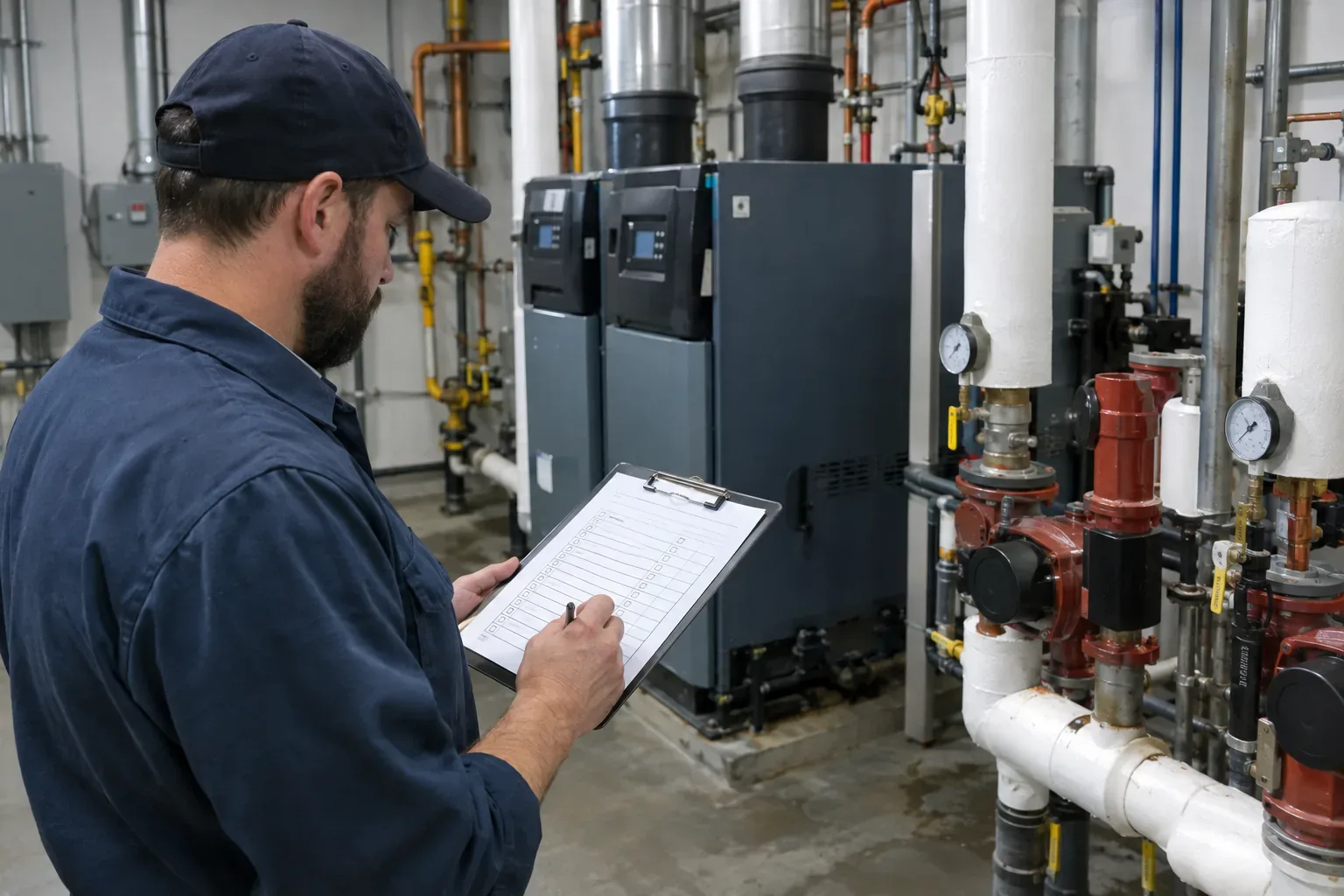
One vendor who knows the whole building, keeps every system on an appropriate interval, and handles a problem in any of them means an owner or manager is not assembling a roster of contractors and hoping they each show up. It is the difference between managing the building's mechanical systems and reacting to them one crisis at a time.
The same visit can check the water heater and the boiler; the same vendor who jets the grease line knows the building's shutoffs; the backflow certification and the seasonal heating check land on one calendar. That integration is worth more than any single service performed in isolation.
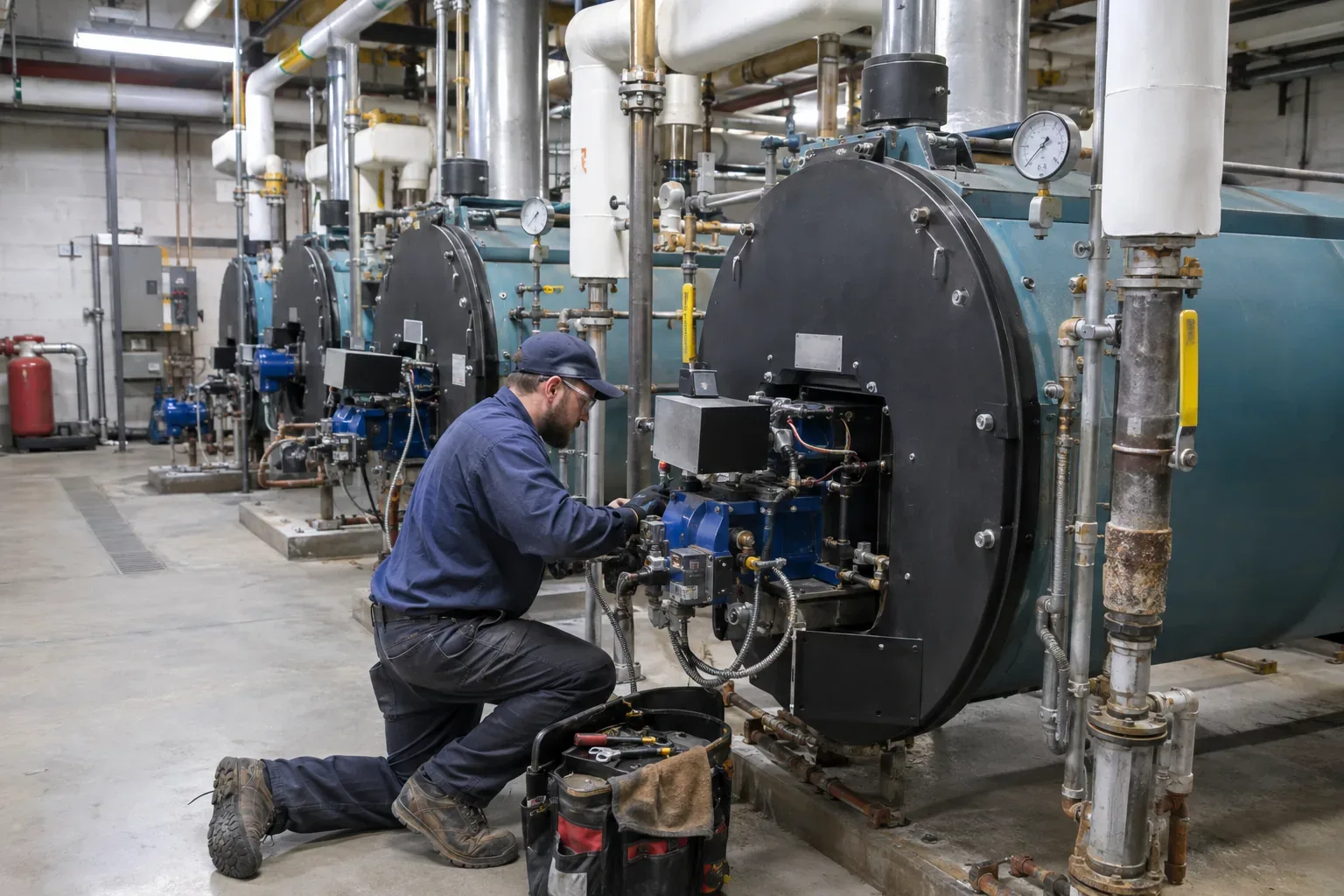
Bringing the building's systems under one program is what makes them coordinate rather than collide. The heating and any shared boiler are readied before the season so a January failure does not leave the building cold, tying into our commercial heating work, while the plumbing and drains stay ahead of failure on the same schedule.
For a building, that integration is worth more than any single service performed in isolation, because the systems share space, share failures, and share the cost of neglect. A program treats the building as the connected whole it is.
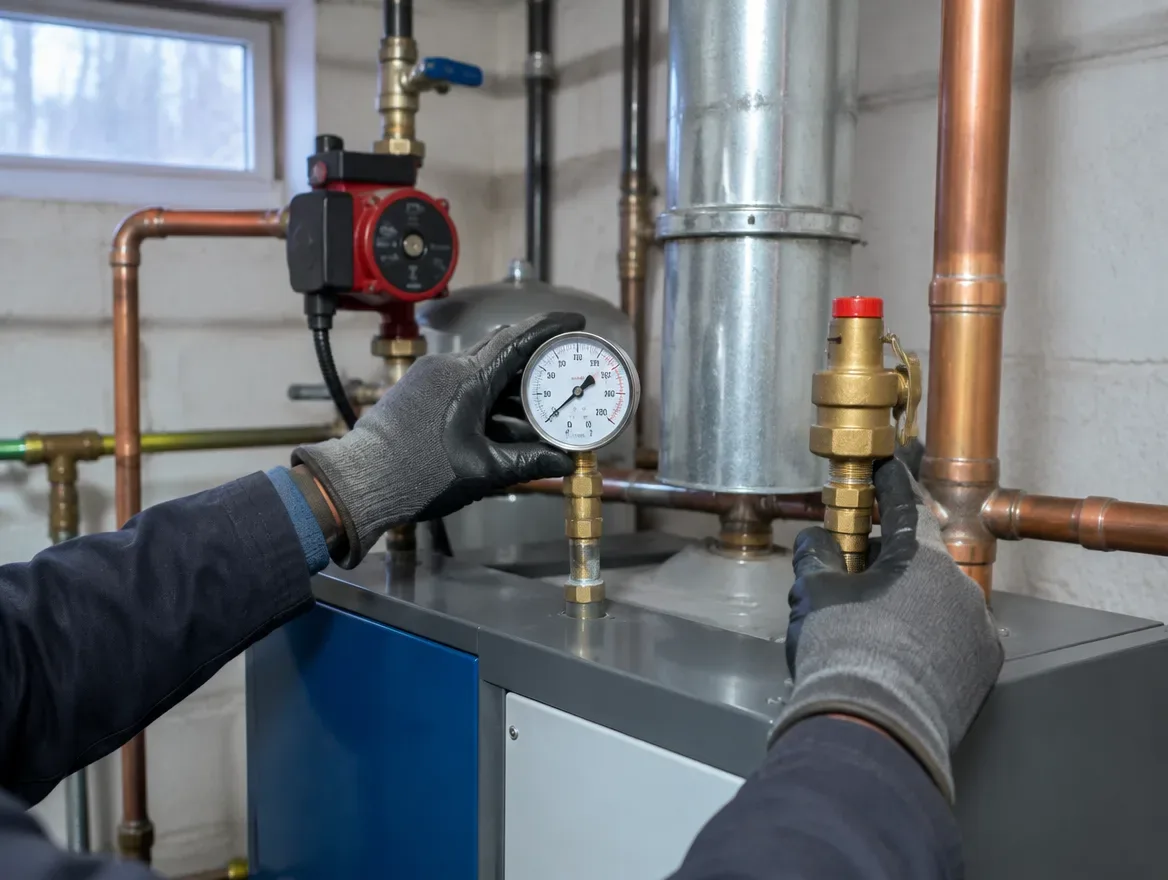
The systems that keep a commercial building running, its plumbing, its drains, its hot water, its gas, and its heating, are usually managed as if they were unrelated, each one ignored until it fails and then handled as a separate emergency with a separate call. That is the expensive way to run a building, because every one of those failures arrives without warning, at the worst time, at the emergency rate, and often with closed hours attached. A preventative maintenance program replaces that pattern with a single schedule that keeps all of those systems ahead of failure.
The value is not any one task; it is the coordination. One vendor who knows the whole building, keeps every system on an appropriate interval, and handles a problem in any of them means an owner or manager is not assembling a roster of contractors and hoping they each show up. It is the difference between managing the building's mechanical systems and reacting to them one crisis at a time, and it is what a program is built to provide.
What to expect
Scoped to your building, scheduled around your operations, and documented for whoever you answer to.
A restaurant leans on grease lines and hot water; an office on restrooms, backflow, and heating; a multi-unit building on shared systems. We build it around what your property actually has.
Plumbing, drains, hot water, gas, and heating on one coordinated schedule, with the disruptive work done off-hours around your operations.
What was serviced, when, in what condition, and what is coming, so reporting writes itself and compliance items are on file when asked for.
From our customers
Excellent reputation and flexibility to meet my company's needs.
Polite, professional & clean. I often work with Jeff: very knowledgeable and motivated. Definitely recommend Prime Plumbing.
A commercial building's maintenance almost always has to be justified to someone, an owner, a landlord, a franchise, a board, and that means the program has to produce a record, not just quietly keep things running. A good program documents what was serviced, when, in what condition, and what is coming, so the reporting writes itself and compliance items like backflow certification are on file when asked for. That documentation turns maintenance from an invisible cost into a demonstrable one.
It also makes the cost predictable. A program is a planned line item on a schedule you control, which budgets far more cleanly than a year of random emergency invoices, and almost always costs less, because the planned interval on any system is a fraction of the emergency plus the closed hours it prevents. Prime Plumbing works out of 271 Salem Street in Woburn and holds Massachusetts plumbing license 17347, and does gas work to 248 CMR with the required permits. To set up a program, contact us or call (617) 354-4545. For a manager running several buildings, this connects to our property management work.
Before you call
Tell us your property type and which systems give you the most trouble, and we can scope a program.
It brings the building's systems onto one coordinated schedule: the drains and grease lines kept clear, the plumbing fixtures, backflow certification, water heating and shutoffs kept ahead of failure, and the heating and any shared boiler readied before the season, with the gas kept safe and to code. The value is one vendor coordinating all of it rather than five separate systems each handled as its own emergency.
Because calling as things break means every failure arrives without warning, at the worst time, at the emergency rate, often with closed hours. A program keeps every system ahead of failure on a schedule you control, which costs less and disrupts less. It also means one vendor who knows the whole building, rather than assembling a roster of contractors and hoping each shows up when a different system fails.
Yes, and that is a core part of it. The program documents what was serviced, when, in what condition, and what is coming, so reporting to an owner, landlord, franchise, or board writes itself, and compliance items like backflow certification are on file when asked for. Documented maintenance turns an invisible cost into a demonstrable one you can justify and budget.
As a planned line item on a schedule you control, which budgets far more cleanly than a year of random emergency invoices, and almost always costs less, because a planned interval on any system is a fraction of the emergency plus closed hours it prevents. We scope it to your building's actual systems and usage so you are paying for what the property needs, not a generic plan.
Yes. A restaurant's program leans on grease lines and hot water; an office or retail building on restrooms, backflow, and heating; a multi-unit building on the shared systems affecting every tenant. We build the program around what your property has and how hard each system is used, and adjust it over time, rather than selling one-size coverage that fits no one well.
Yes. The same licensed team handles the plumbing, drains, hot water, gas, and heating, so the whole program stays with one accountable contractor rather than being split across trades. That is much of the point: a problem that crosses systems, as they often do in a building, does not cross contractors, and one vendor is responsible for keeping the whole building running.
Ready when you are
Tell us your property type and which systems give you the most trouble. Schedule online or call our Woburn team at (617) 354-4545.