
Flush the sediment
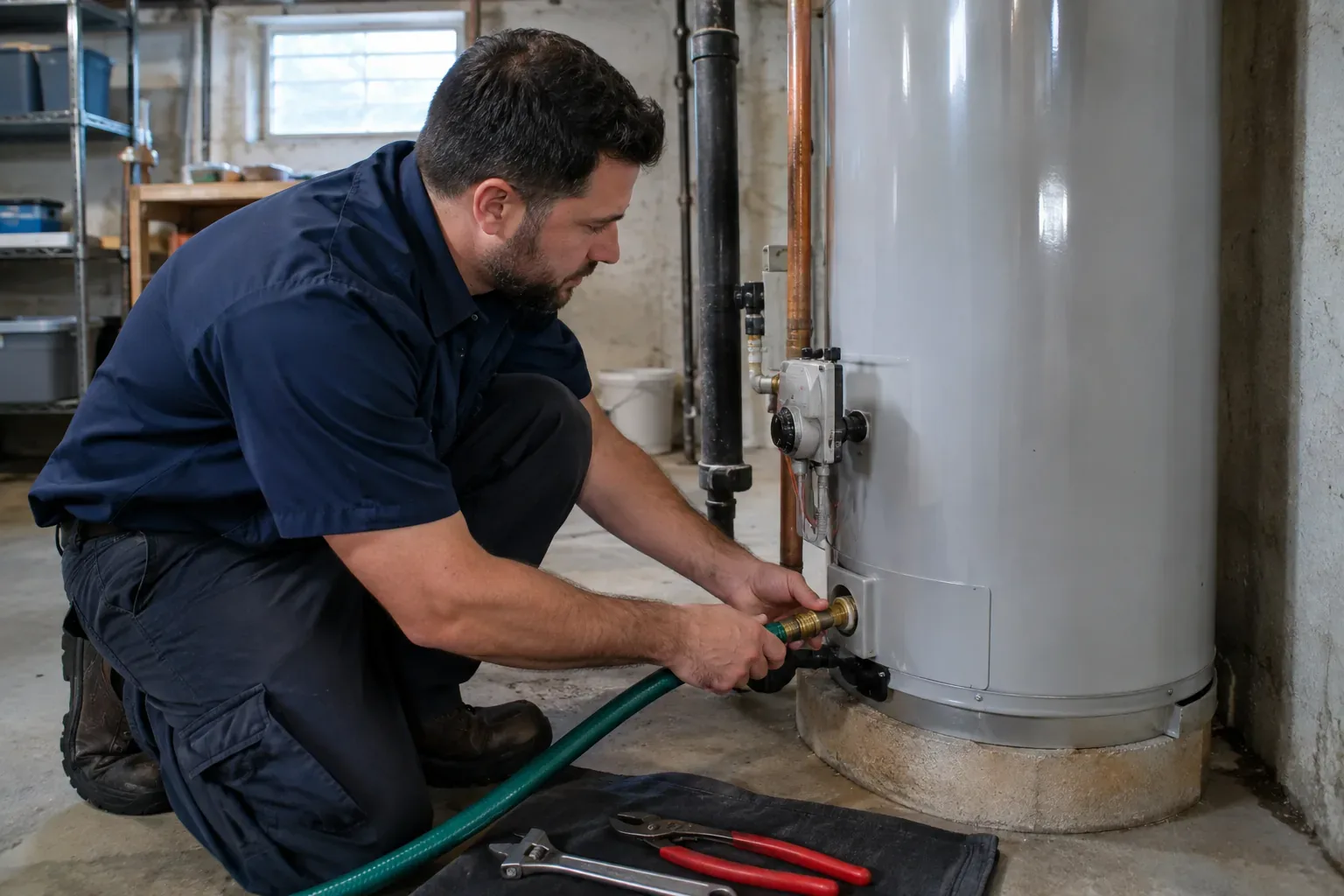
Minerals bake into a hard crust on the bottom of a tank, insulating the burner and corroding the steel. A yearly flush clears it before it does its damage, and the heater runs quieter and lasts longer.
Woburn, MA · Residential + Commercial
A water heater is one of the few pieces of home equipment where a small yearly service genuinely pushes off a large replacement cost. Flushing the sediment, checking the anode rod, and testing the relief valve keep a tank working longer, and a tankless unit needs its own descaling. Prime Plumbing services tank and tankless water heaters across Woburn and Greater Boston. Call (617) 354-4545.
A small service, a big payoff
Most water heaters that fail early fail for a preventable reason. A yearly visit catches all three.
Minerals bake into a hard crust on the bottom of a tank, insulating the burner and corroding the steel. A yearly flush clears it before it does its damage, and the heater runs quieter and lasts longer.
The sacrificial rod corrodes in place of the tank. Once it is spent, the tank itself starts to rust through. Replacing a worn rod is a cheap part that can add years to the unit.
A tankless unit has no tank to flush, but mineral scale builds on its narrow heat exchanger. Periodic descaling keeps it efficient, keeps output up, and keeps the warranty intact.
Where the life of a tank is won or lost
The two things that decide whether a tank reaches the long end of its life or the short end, and both are inexpensive to stay ahead of.

Most water heaters that fail before their time fail for a preventable reason: sediment. Minerals settle to the bottom of the tank and bake into a hard crust that insulates the burner from the water above it. Once that layer forms, the heater works harder, runs louder, recovers slower, and corrodes faster because the steel under that hot sediment takes the brunt.
Draining and flushing the tank once a year clears that sediment before it does its damage. On a tank caught before the corrosion sets in, it is the single most cost-effective thing you can do for the unit.
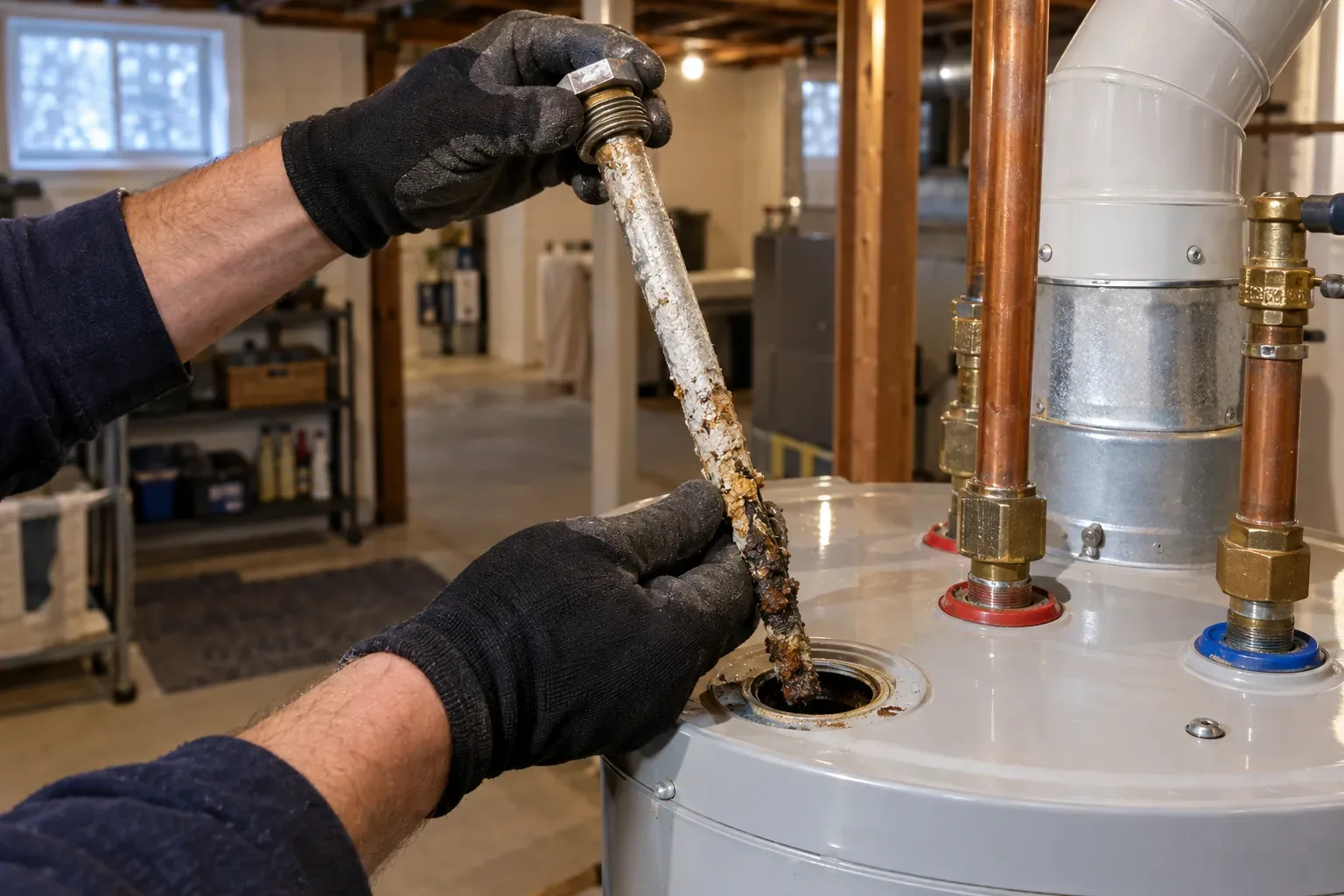
Inside every tank is a part most homeowners have never heard of and that quietly determines how long the tank lasts: the anode rod. It is a sacrificial metal rod designed to corrode in place of the steel tank. Once the rod is spent, the corrosion moves on to the tank itself, which is when a heater starts leaking from the body and has to be replaced.
Checking the rod during a visit, and replacing it when spent, can add years to a tank for a fraction of what a new heater costs.

A tankless water heater has no tank of sediment to drain, but it is not maintenance-free; it needs a different service. Because the water passes through a narrow heat exchanger rather than sitting in a big tank, mineral scale builds up on those exchanger surfaces over time, and in a hard-water home it builds faster. Left alone, that scale reduces the unit's efficiency, hurts its output, and eventually triggers fault codes that shut it down.
Descaling, running a flush solution through the heat exchanger to dissolve the scale, is the tankless equivalent of the annual tank flush, and it keeps the unit performing and its warranty intact. How often depends on your water hardness, and we set a sensible interval rather than a generic one. If you have a tankless unit or are considering one, our tankless water heaters page covers how they work and what a correct install involves.
What to expect
Either way, you get an honest read on where the unit stands so you can plan rather than be surprised.
We flush the sediment, inspect and replace the anode rod when it is spent, test the temperature-and-pressure relief valve, and check the connections and venting.
We run a flush solution through the heat exchanger to clear the mineral scale, confirm the unit is running cleanly, and set the descaling interval to your water hardness.
We tell you where the unit stands and roughly how much service life it likely has left, so a replacement is something you plan for, not something that surprises you.
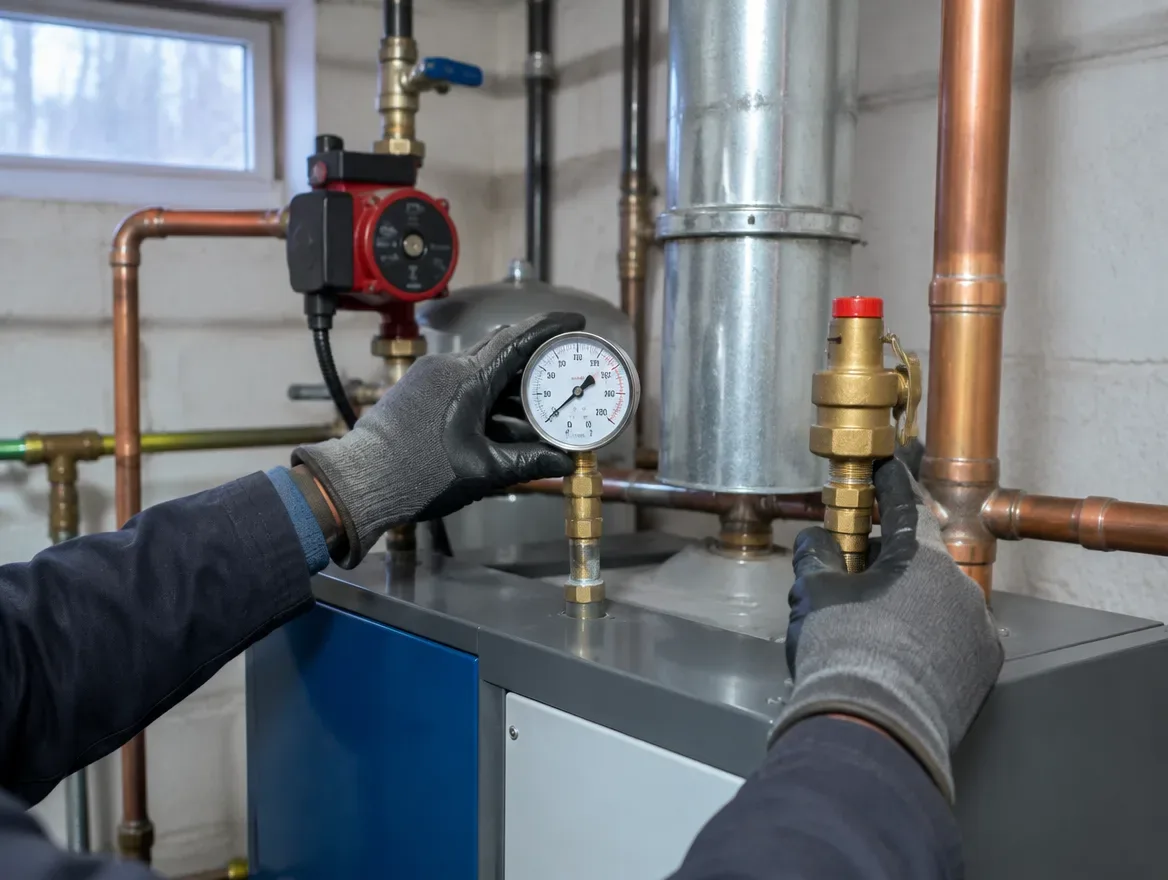
The water heater rarely sits alone. It shares a basement with the boiler, the main water shutoff, and the plumbing that ties them together, and on an indirect setup the boiler is what actually makes the domestic hot water. For homeowners who would rather not schedule a separate trip for each, we fold the water heater service into a broader preventative maintenance visit, checking the heater, the heating system, and the plumbing on one visit so small problems surface before they become emergencies.
That is especially worth doing before winter, when a water heater working against cold incoming water and a boiler about to run all season are both under the most strain. Catching a spent anode, a weeping relief valve, or a tankless unit overdue for descaling in the fall is far cheaper and less disruptive than discovering it as a cold shower or a failure in January.
From our customers
Great prices and good work. As plumbers go these days it is hard to find good labor that isn't doing large new builds. Rich and Rob are great at taking care of your problem for you. I've used them on rentals almost exclusively.
Rich is super responsive, took care of a radiator issue quickly and just in time ahead of the cold weather! Would highly recommend Prime Plumbing.

Prime Plumbing works out of 271 Salem Street in Woburn, near the I-93 and Route 128 interchange, central to the homes and businesses we serve across Greater Boston. The company is licensed and insured and holds Massachusetts plumbing license 17347. We tell you honestly where your water heater stands rather than upselling a service it does not need.
To schedule water heater maintenance, or to add it to a whole-system checkup, contact us or call (617) 354-4545.
Before you call
Telling us whether your unit is a tank or tankless, and its rough age, helps us bring the right service.
Once a year for a conventional tank is the sensible standard, and more often in a hard-water home. Yearly flushing clears the sediment that settles to the bottom of the tank before it insulates the burner and corrodes the steel. It is a small, inexpensive service that is the single most cost-effective thing you can do to extend a tank's life.
On a tank, we flush out the sediment, inspect and replace the anode rod if it is spent, test the temperature-and-pressure relief valve, and check the connections and venting. On a tankless unit, we descale the heat exchanger. We also give you an honest read on the unit's remaining service life so you can plan a replacement rather than be caught by a failure.
The anode rod is a sacrificial metal rod inside a tank water heater that corrodes in place of the steel tank, drawing corrosion to itself so the tank does not rust through. Once it is used up, the tank itself starts to corrode. Checking and replacing a spent rod during maintenance is a cheap part that can add years to a tank and delay a full replacement.
Yes, but a different kind. A tankless unit needs periodic descaling, running a flush solution through the heat exchanger to clear the mineral scale that builds up on its narrow surfaces, because that scale reduces efficiency and eventually triggers faults. How often depends on your water hardness. Regular descaling keeps a tankless unit performing and its warranty intact.
Yes, meaningfully. Most water heaters that fail early fail from preventable sediment corrosion or a spent anode rod, both of which maintenance addresses. A tank that is flushed yearly and has its anode checked commonly reaches the long end of its expected life, while one that is never serviced wears out years sooner. The service costs a fraction of an early replacement.
Before winter is ideal. A water heater works hardest against cold incoming water in the coldest months, so catching a spent anode, a weeping relief valve, or a tankless unit overdue for descaling in the fall means fixing it on your schedule rather than discovering it as a cold shower in January. We can fold it into a broader whole-system checkup on the same visit.
Ready when you are
Tell us whether your unit is a tank or tankless and its rough age. Schedule online or call our Woburn team at (617) 354-4545.