Pressure and the safety valves
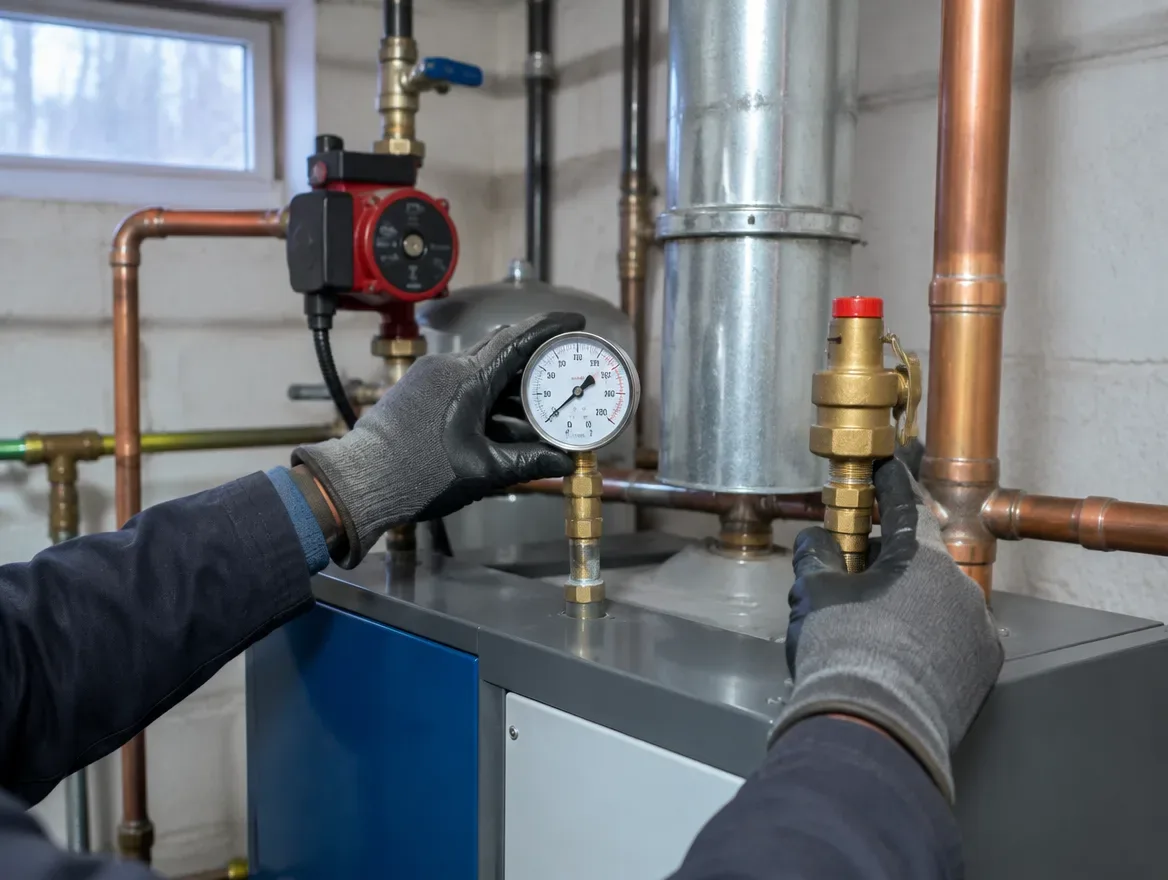
The relief valve is tested, system pressure checked, and the expansion tank inspected, because a waterlogged tank and a weeping valve are quiet problems that become a mid-winter failure.
Woburn, MA · Residential + Commercial
Most of the emergency no-heat calls we run in January trace back to a service that was skipped in October. A fall tune-up and safety inspection tests the parts that fail under load, so the system starts winter with margin instead of running to failure. Prime Plumbing services heating systems across Woburn and Greater Boston. Call (617) 354-4545.
What a tune-up actually does
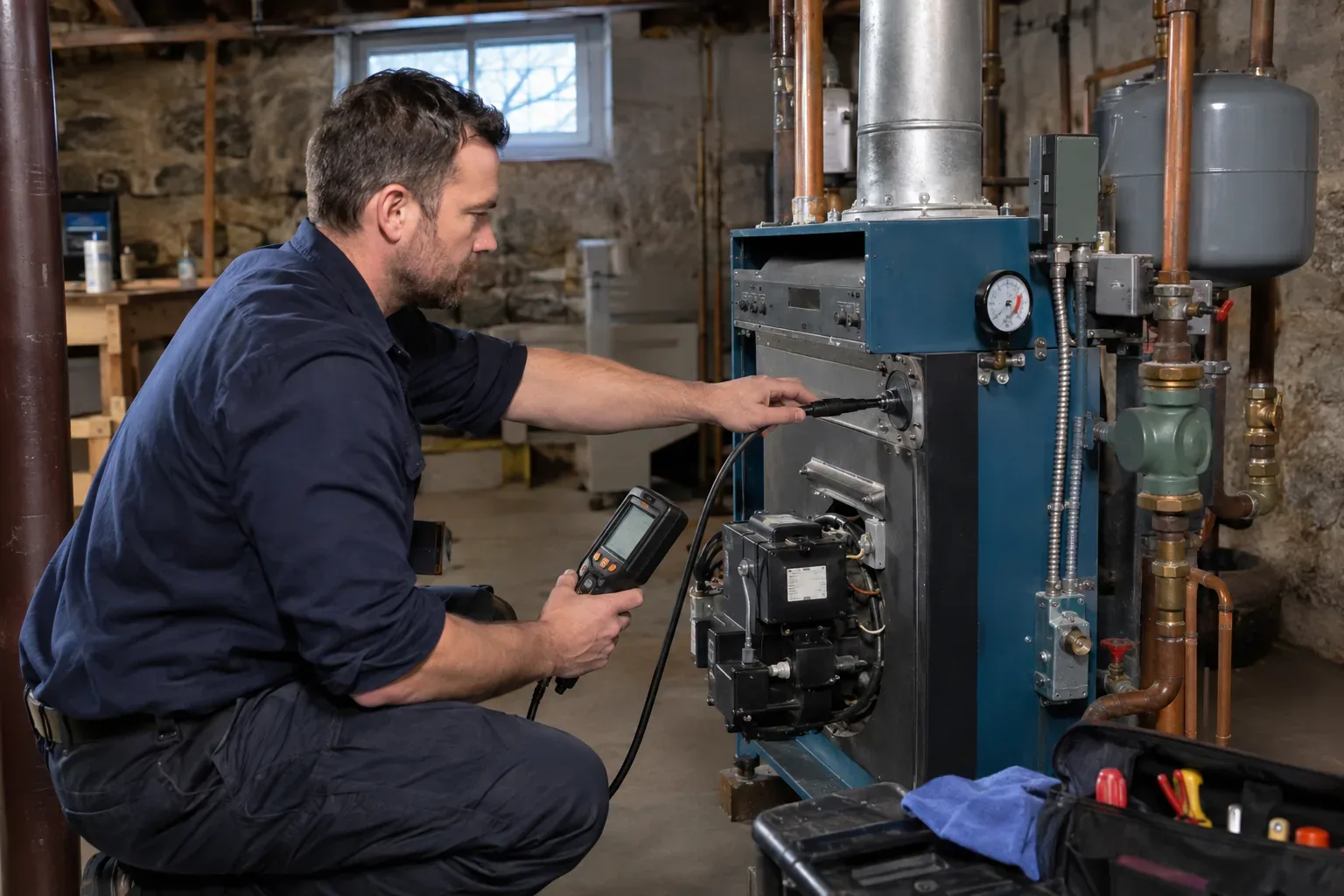
A proper heating service is not a quick look; it is testing and cleaning the specific components that fail under winter load, while they are still small to fix.
The relief valve is tested, system pressure checked, and the expansion tank inspected, because a waterlogged tank and a weeping valve are quiet problems that become a mid-winter failure.
The burner is cleaned and checked for safe, efficient combustion. A burner running dirty wastes fuel all season and, if it vents poorly, can produce carbon monoxide.
The circulator and zone valves are exercised so they are not seized when the season starts, and trapped air is bled from the zones so heat actually reaches every room.
Performance and safety together
The same visit that tunes the system for efficiency is the one that confirms it is burning cleanly and venting safely. The two belong together.
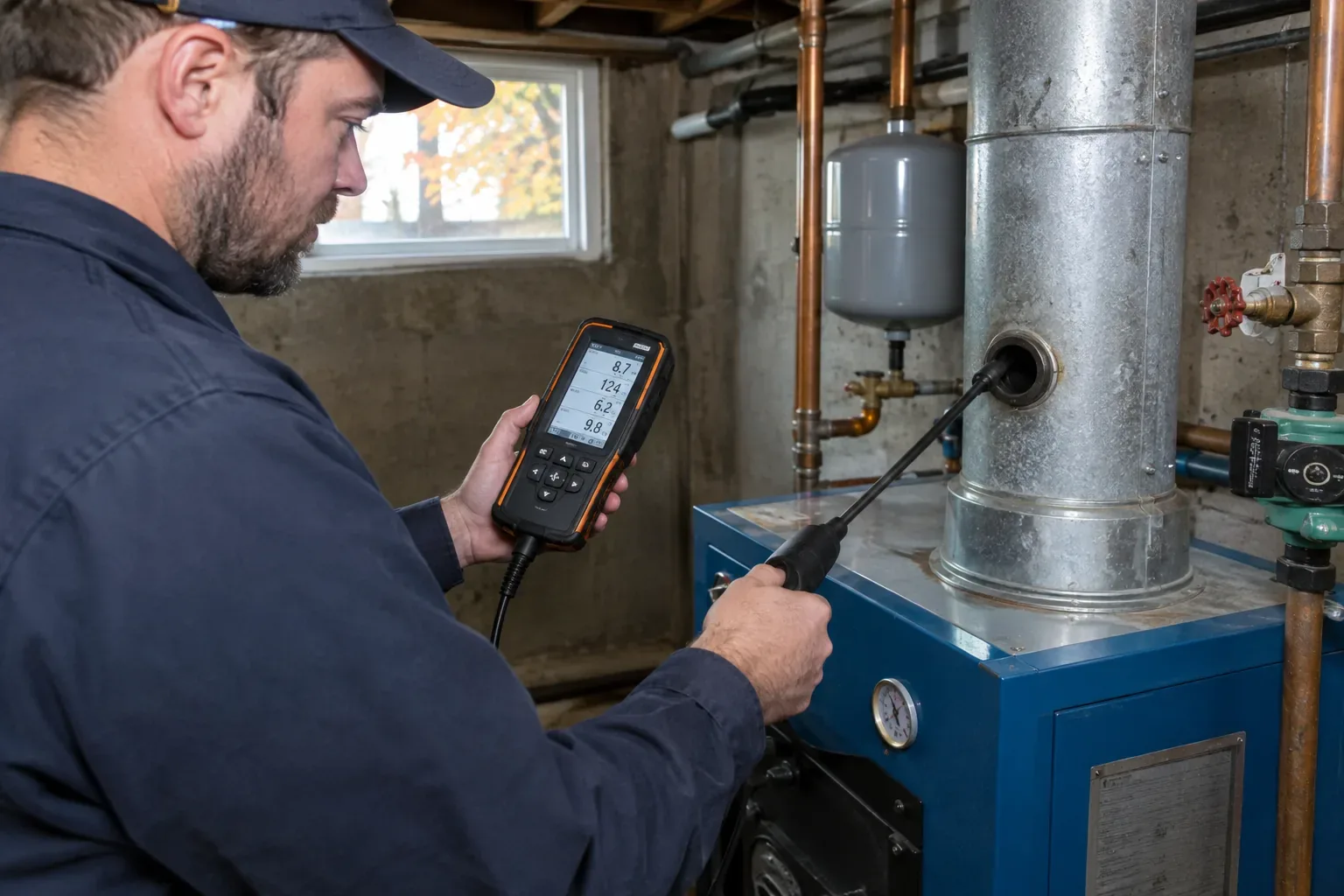
Any system that burns fuel, gas or oil, produces combustion byproducts, and a system that is not venting correctly or is burning dirty can produce carbon monoxide, the colorless, odorless gas that a heating system is a leading household source of. Part of servicing a heating system is confirming it is burning cleanly and venting properly, and checking the flue and connections.
We treat the safety inspection as a non-negotiable part of servicing any fuel-burning system, because a system that heats well but vents poorly is not a system that is actually fine. A working carbon monoxide detector on every level of the home is the essential companion to it.
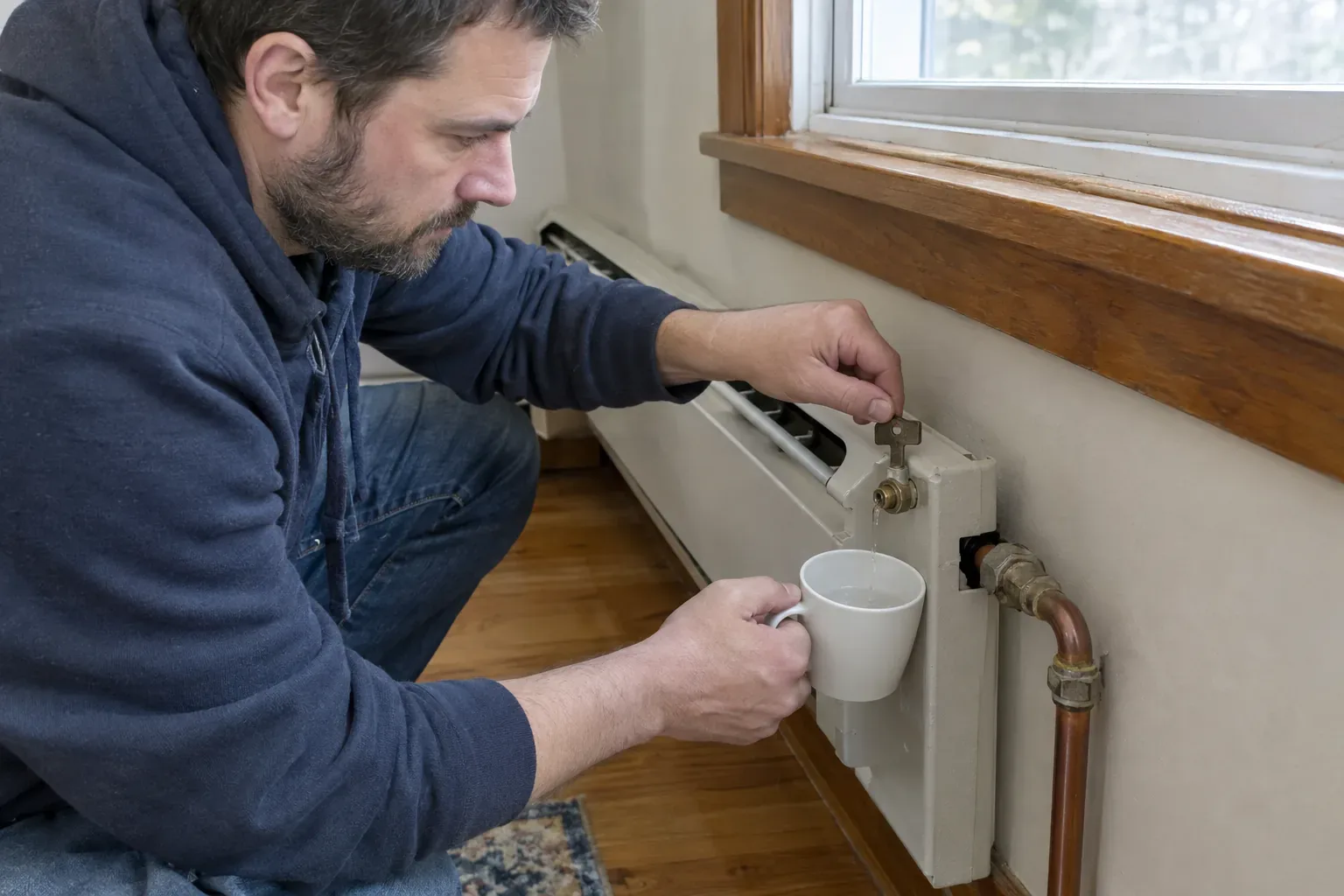
A circulator that is stiff in October seizes in January; an airbound zone that is a minor annoyance in the fall is a cold bedroom in a cold snap; a burner running dirty wastes fuel all season. The tune-up addresses each of those while it is small, which is both cheaper and far less disruptive than the failures they prevent.
We flag anything weakening while it is still a calm fall repair rather than a deep-winter emergency, moving the work from the coldest night, at emergency cost, to a scheduled visit you plan.
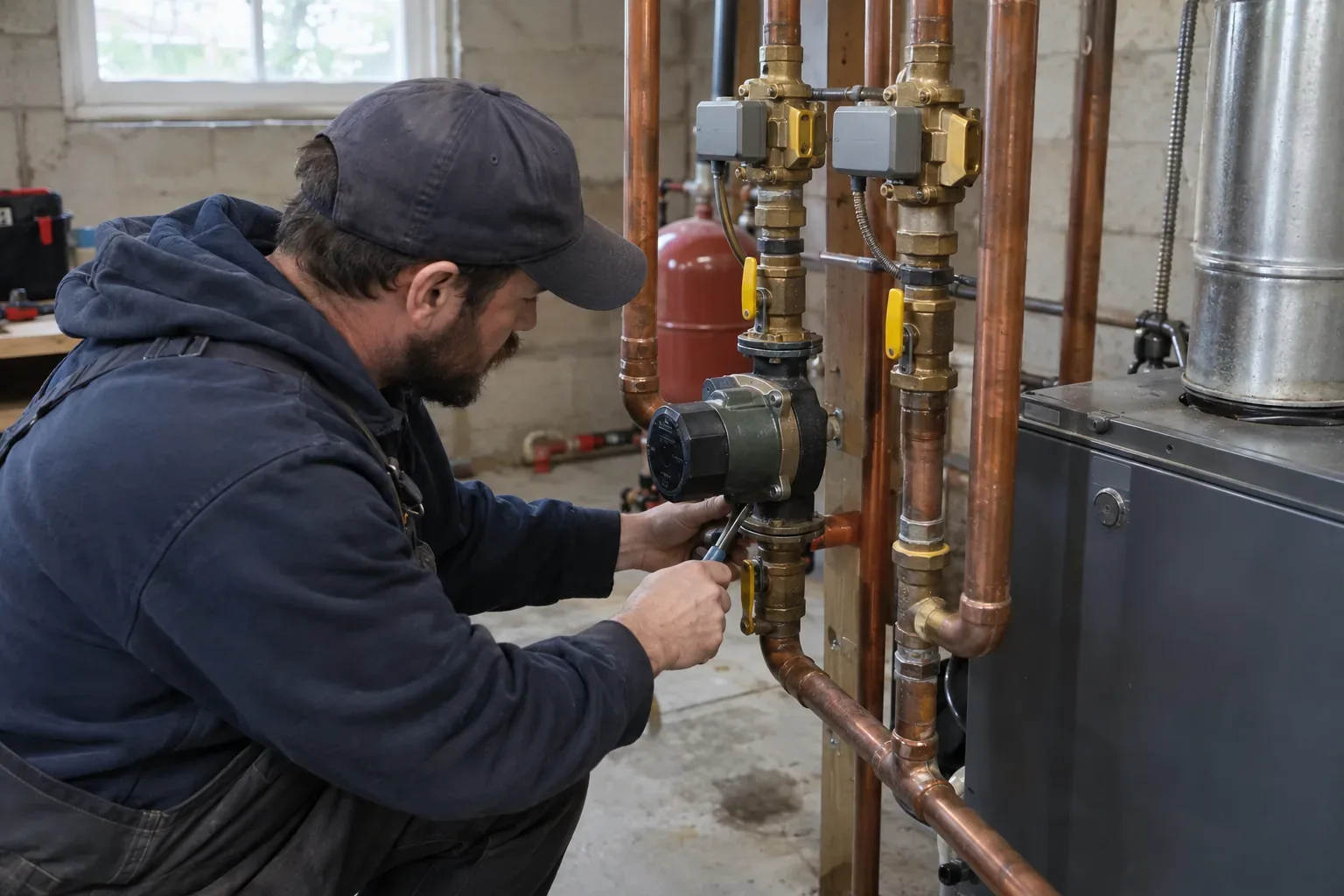
There is a pattern to emergency heating calls, and it is seasonal. A heating system that barely limped through a mild November often does not survive the first week of single-digit nights, and the failure always seems to come on the coldest one, when the system is under the most load and a service call is hardest to get. A large share of those deep-winter no-heat emergencies were preventable, because the part that failed was showing its age in the fall, when it could have been caught and replaced calmly.
That is the whole case for maintenance before the season rather than service after a breakdown. A tune-up tests and cleans the components that fail under load and catches the ones that are weakening, so the system begins winter with margin instead of running until something gives. For a system your household depends on through a New England winter, that is a trade worth making every year.
What to expect
We test and clean the parts that fail under winter load, confirm the system is safe, and flag anything weakening.
Relief valve, pressure, expansion tank, burner, circulator, and zone valves, and we bleed the zones so heat reaches every room.
Confirming clean combustion and proper venting, and checking the flue and connections, because a system that heats well but vents poorly is not fine.
Anything on its way out gets caught while it is still a calm fall repair, not a January emergency, and can fold into a whole-home visit.
From our customers
Rich is super responsive, took care of a radiator issue quickly and just in time ahead of the cold weather! Would highly recommend Prime Plumbing.
We would, without question, recommend Prime to anyone who needs professional work done with a professional team.
For many homeowners the most convenient way to handle heating maintenance is not on its own but folded into a broader check of the home's systems. We include the heating service in a whole-home preventative maintenance visit that also covers the plumbing and the water heater, so the plumbing checkup, the water heater flush, and the heating tune-up all happen on one trip before winter rather than three separate appointments.
For commercial buildings that cannot afford a heat failure with tenants or customers inside, heating maintenance runs as part of a scheduled commercial preventative maintenance program. Prime Plumbing works out of 271 Salem Street in Woburn, central to the homes and businesses we serve across Greater Boston. The company is licensed and insured, holds Massachusetts plumbing license 17347, and does gas work to 248 CMR with the required permits. To schedule a fall heating tune-up, contact us or call (617) 354-4545. If a tune-up turns up a bigger problem, our heating system repair work handles it.
Before you call
Tell us your system type and when it was last serviced, and we can scope the tune-up.
In the fall, before the heating season starts. A tune-up tests and cleans the parts that fail under load, so the system begins winter with margin instead of quitting on the coldest night. Most of the emergency no-heat calls we run in January trace back to a service that was skipped in October, so fall is the window that prevents the most trouble.
Testing the relief valve and system pressure, inspecting the expansion tank, cleaning and checking the burner for safe combustion, exercising the circulator and zone valves, and bleeding trapped air from the zones. On a steam boiler it also includes checking the low-water cutoff and safety controls. It is testing and cleaning the specific parts that fail under winter load, not a quick look.
We do them together, because they belong together. The tune-up handles performance, cleaning and testing the parts that fail under load. The inspection half is about safety: confirming a fuel-burning system is burning cleanly and venting properly, since a heating system is a leading household source of carbon monoxide. The same visit that tunes the system for performance confirms it is operating safely.
It prevents a large share of them. A circulator that is stiff in the fall seizes in January; a burner running dirty wastes fuel all season; a weakening part fails under the first hard load. A tune-up catches those while they are small and calm to fix, which is both cheaper and far less disruptive than the mid-winter emergency they would otherwise become. It is not a guarantee, but it moves the odds sharply.
Yes, it is a core part of the service. Any fuel-burning heating system produces combustion byproducts, and one that vents poorly or burns dirty can produce carbon monoxide, which is colorless and odorless. We confirm the system is burning cleanly and venting properly and check the flue and connections. A working carbon monoxide detector on every level of the home is the essential companion to that check.
Yes, and it is the efficient way to do it. We fold the heating tune-up into a whole-home preventative maintenance visit that also covers the plumbing and the water heater, so the season's readiness happens on one trip rather than three appointments. For commercial buildings, heating maintenance runs as part of a scheduled commercial maintenance program.
Ready when you are
Tell us your system type and when it was last serviced. Schedule online or call our Woburn team at (617) 354-4545.