
The signs before you see water
A water bill that jumped with no change in use, a meter that creeps with everything off, a warm spot on a floor, a musty smell, bubbling paint, or the faint sound of running water in a quiet house.

Woburn, MA · Residential + Commercial
The leaks that cost the most are the ones you cannot see: the pipe inside a wall, under a slab, or in the ground between the meter and the house. Prime Plumbing finds concealed leaks precisely and repairs them with the least demolition possible, for homes and businesses across Woburn and Greater Boston. Call (617) 354-4545.
Found precisely, fixed small
Water travels along framing and runs downhill before it shows, so the stain is almost never over the source. Detection closes that gap.
A water bill that jumped with no change in use, a meter that creeps with everything off, a warm spot on a floor, a musty smell, bubbling paint, or the faint sound of running water in a quiet house.
Meter and isolation tests, acoustic listening equipment, and moisture mapping pinpoint the exact spot, so the repair is one square of drywall rather than an exploratory demolition.
A wall or ceiling leak needs a small opening; a slab leak can be repaired in place or rerouted; an underground service line is its own job. We tell you which fits and why.
Locate first, demolish never
Finding the leak precisely is the difference between opening one square of drywall and opening a whole ceiling to go looking.

We start non-invasively. Isolating the plumbing and watching the meter tells us whether the leak is on the pressurized supply side. From there we narrow it down with the right tools for where it is hiding: acoustic listening equipment that hears water escaping a pressurized line, moisture meters that map where water has traveled behind a surface, and a drain camera when the suspect is a waste line rather than a supply line.
Water is deceptive: it travels along framing and runs downhill before it shows. Detection is what turns a guess into a small, precise opening.
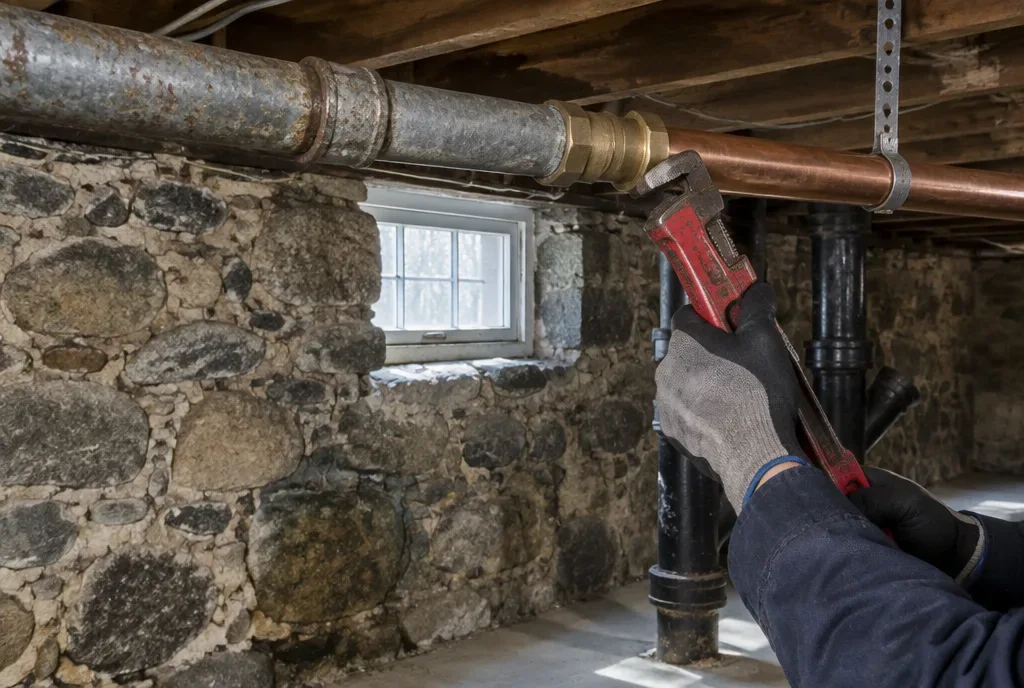
A concealed leak usually announces itself indirectly, and catching those signals early is what keeps a small repair from becoming a rebuilt wall. The clearest tell is the water bill: a jump with no change in how you are using water means water is going somewhere you are not.
The rest are physical: a warm spot on a floor over a hot-water line, a musty smell, paint that bubbles or discolors, mold in a corner, or the faint sound of running water in a quiet house. Any one of these is worth a look before it spreads.
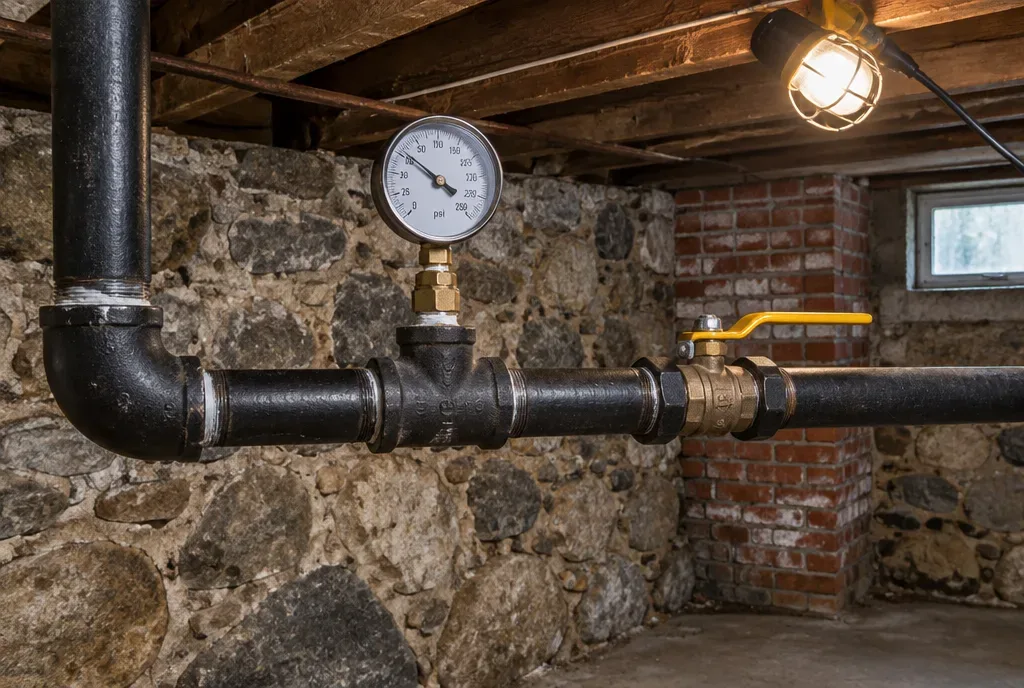
Once the leak is located, the repair depends on where it is. A leak inside a wall or ceiling is usually accessible with a small opening, the failed section replaced, and the pipe supported so it does not chafe again. A slab leak, where a supply line under the concrete floor has failed, has two honest paths: break through to the pipe and repair it in place, or reroute that run overhead or through a wall to bypass the slab entirely, which is often the better long-term answer for an aging line.
An underground leak in the water service line between the street and the house is its own job, sometimes a spot repair and sometimes a replacement of the run. In every case we tell you which situation you have and why one repair fits it better than another, before the work is scheduled.
What to expect
You get the location, the cause, and the repair options before we cut into anything.
The bill, the damp spot, the sound, and confirm whether there is a live leak with a meter and isolation test.
Acoustic equipment, moisture mapping, and a drain camera pinpoint the exact spot before anything is opened.
An accessible fix, a slab repair or reroute, or a service-line repair, with the honest option laid out before work begins.
From our customers
We would, without question, recommend Prime to anyone who needs professional work done with a professional team.
Great prices and good work. Rich and Rob are great at taking care of your problem for you. I've used them on rentals almost exclusively.

A concealed leak does two kinds of damage at once. It wastes water continuously, which is why the bill is the early warning. And it feeds moisture into the parts of a house that are supposed to stay dry, framing, subfloor, insulation, and drywall, where it grows mold and rots wood on a schedule you cannot see. By the time it shows on the surface, it has usually been working for a while.
In older Greater Boston homes with original copper or galvanized lines, a first pinhole leak is also information: it often means the pipe is reaching the age where more will follow. Prime Plumbing works out of 271 Salem Street in Woburn and holds Massachusetts plumbing license 17347. If your water bill jumped or a damp spot has you worried, contact us or call (617) 354-4545. Our plumbing repair page covers how a single leak fits into the health of the whole system.
Before you call
Telling us what you have noticed, a bill jump, a damp spot, a sound, helps us start in the right place.
The most reliable sign is a water bill that rose with no change in usage, or a meter that keeps moving when every fixture is off. Physical signs include a warm spot on the floor, a musty smell, bubbling or discolored paint, unexplained mold, or the faint sound of running water in a quiet house. Any of these is worth checking before it spreads.
That is the entire point of leak detection. We use a meter and isolation test to confirm a live leak, then acoustic equipment, moisture mapping, and a drain camera to pinpoint the exact location. Finding it precisely means the repair is a small opening rather than an exploratory demolition, which is where hidden leaks otherwise get expensive.
A slab leak is a supply line that has failed under the concrete floor slab. Once we locate it, there are two honest options: break through the slab and repair the pipe in place, or reroute that run overhead or through a wall to bypass the slab. For an aging line, rerouting is often the better long-term answer, and we will explain which fits your situation.
Because the leak is concealed, inside a wall, under the slab, or underground between the meter and the house, so it wastes water continuously without ever showing on the surface. A meter test confirms it: if the meter moves with all water off, water is escaping somewhere hidden. Detection finds where.
A slow hidden leak is rarely an emergency in the flooding sense, but it does two kinds of damage continuously: it wastes water, and it feeds moisture into framing, subfloor, and drywall where it rots wood and grows mold out of sight. Catching it on the early signal keeps both the repair and the water damage small.
Both. Detection is only useful if it leads to the right fix, so we locate the leak and carry out the repair, whether that is replacing an accessible section, rerouting a slab or wall run, or addressing an underground service line. You get the location, the cause, and the repair options together before any work begins.
Ready when you are
Tell us what you have noticed and where. Schedule an appointment online or call our Woburn team at (617) 354-4545, and we will find it before it spreads.