Grease lines and floor drains
The drain that closes a kitchen is almost always a grease-carrying line or a floor drain. Kept clear on a jetting schedule before it backs up, not cleared after a service rush finally blocks it.
Woburn, MA · Commercial
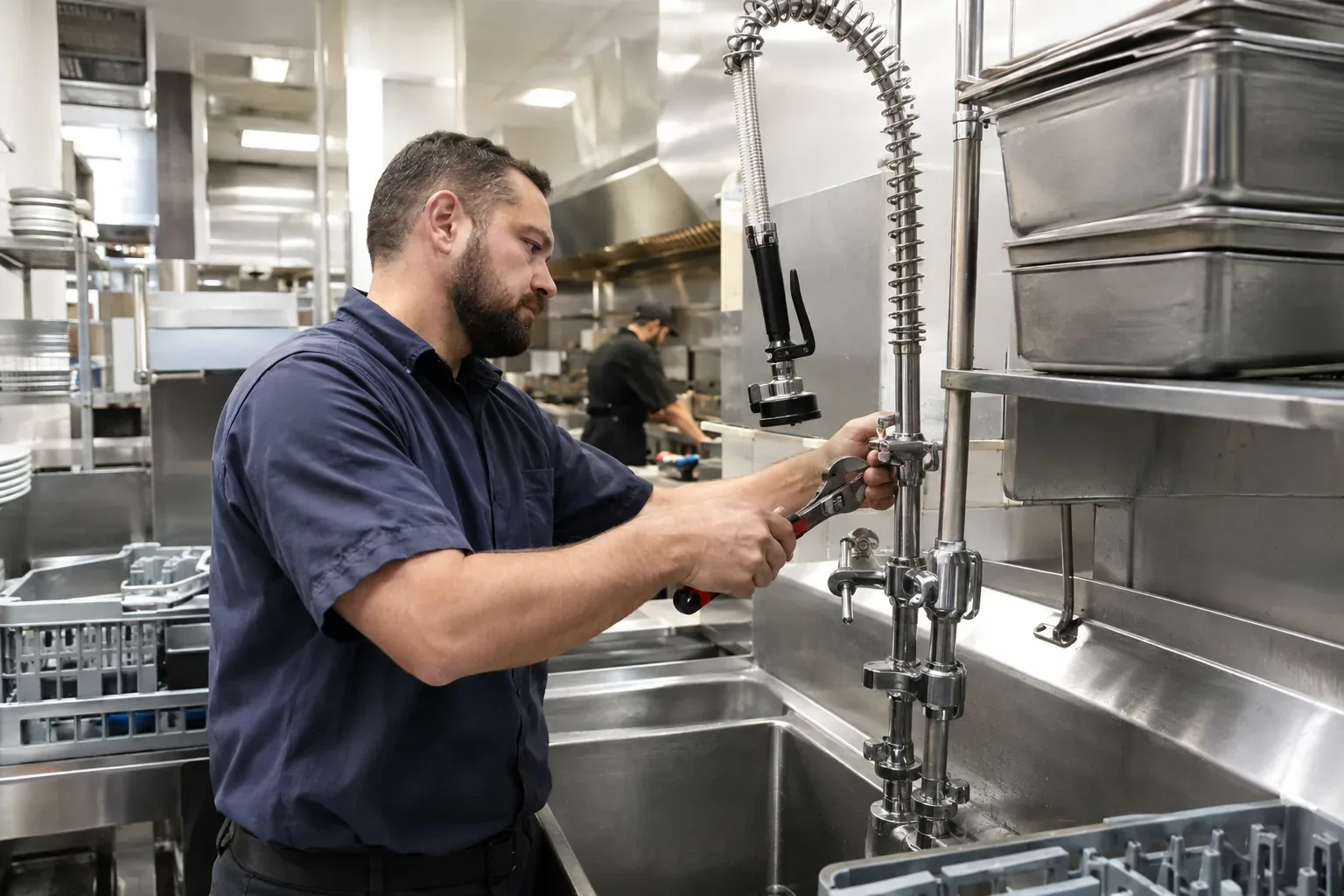
A commercial kitchen runs on plumbing under constant heavy load: grease-carrying drains, pre-rinse and hand sinks in daily hard use, fast-recovery hot water, and a gas cook line. When one fails, service stops. Prime Plumbing handles the whole kitchen for restaurants across Woburn and Greater Boston, scheduled around your hours. Call (617) 354-4545.
The kitchen under constant load
A restaurant kitchen is one of the most demanding plumbing environments there is. Equipment that would last years in a home wears out on a commercial timeline here.
The drain that closes a kitchen is almost always a grease-carrying line or a floor drain. Kept clear on a jetting schedule before it backs up, not cleared after a service rush finally blocks it.
Pre-rinse units, hand sinks, and prep sinks wear on a commercial timeline; a hand sink out of order is a health-code problem. Hot water has to be sized for real demand, not a residential unit pressed into service.
A new fryer, range, or cook-line unit needs a properly sized, permitted gas line to the state code. One team for the gas and the plumbing means a change touching both is not a scheduling puzzle.
Kept ahead of the backup
Handling a kitchen well means understanding it as a working system under pressure and keeping every part of it ahead of failure, not waiting for the emergency.
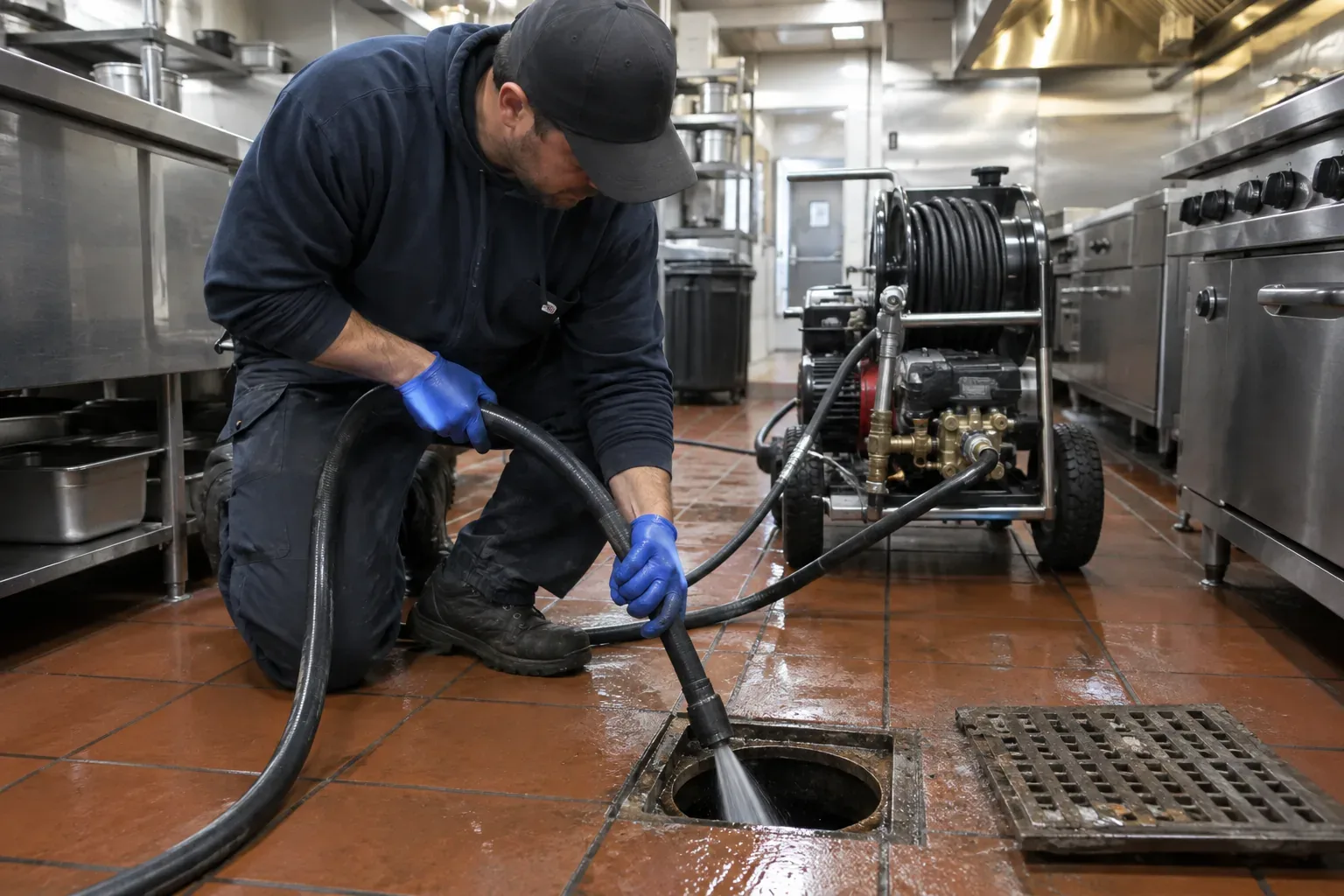
The drain that closes a kitchen closes because grease pours down warm and hardens on the pipe wall until a service rush finally blocks it. The lasting answer is not clearing it after it backs up but keeping it clear on a schedule before it does, with hydro-jetting that scours the grease off the full pipe wall rather than cabling that only bores through.
The grease interceptor is part of this too; a neglected one overflows and backs up the kitchen just as a clogged line does. We keep the floor drains, grease lines, and interceptor clear together on an interval matched to your volume. Our commercial drain cleaning page covers the jetting side in depth.
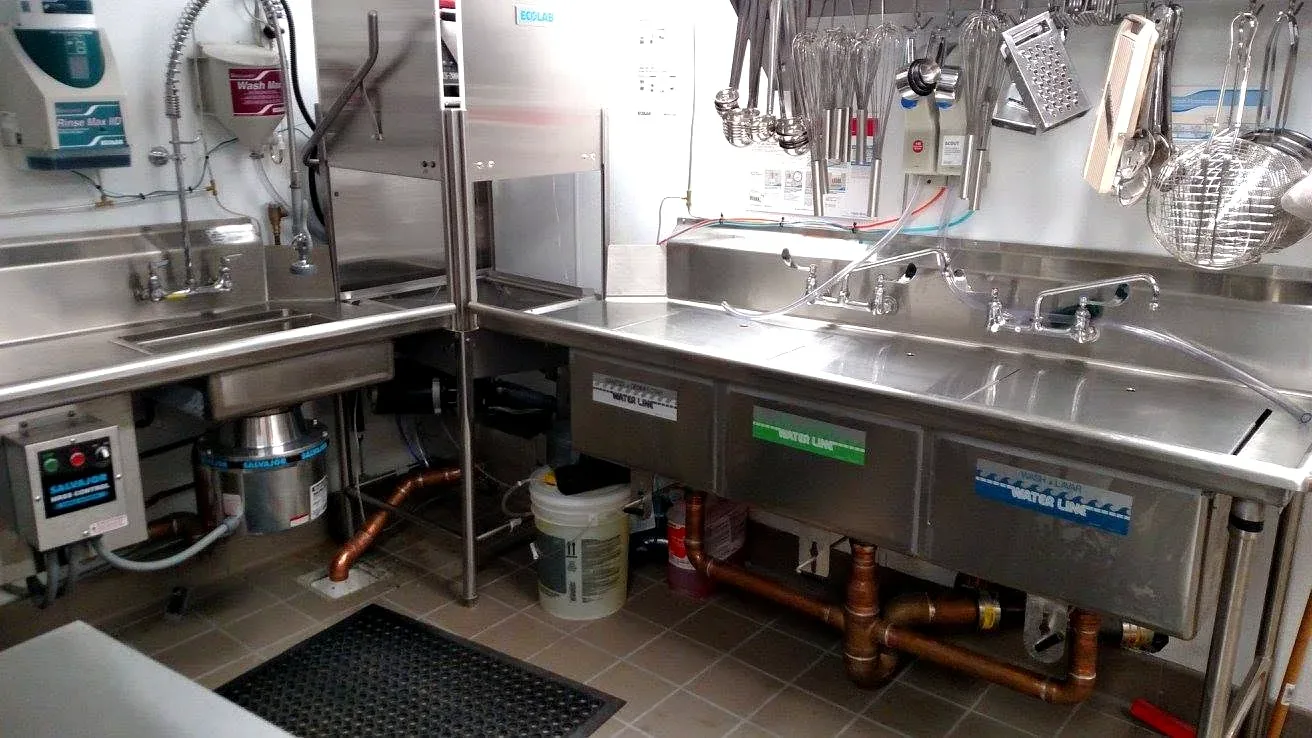
Beyond the drains, a kitchen has three more plumbing systems that have to keep working. The fixtures, pre-rinse units, hand sinks, prep sinks, and the faucets and sprayers that run all day, wear out on a commercial timeline and need repair before they fail during service; a hand sink out of order is also a health-code problem. The hot water has to recover fast enough to keep a busy dish pit supplied, which means a water heater sized for real commercial demand.
And the cook line runs on gas: a new fryer, range, or piece of equipment needs a properly sized, permitted gas line. Because one licensed team handles the drains, fixtures, hot water, and gas, a kitchen problem touching more than one does not become a scheduling puzzle across contractors.

A restaurant kitchen is one of the most demanding plumbing environments there is. Everything runs hard, all service long: the dish pit and pre-rinse move gallons a minute, the prep sinks fill and drain constantly, the drains carry grease and food solids a home never sees, and the hot water has to keep up with all of it at once. Equipment that would last years in a home wears out on a commercial timeline here, and a failure does not just inconvenience someone, it stops service and can fail a health inspection.
That load is why restaurant plumbing is its own discipline rather than home plumbing at a bigger scale. The drains clog faster, the fixtures wear harder, and the hot-water demand is unforgiving. Handling it well means understanding a kitchen as a working system under pressure and keeping every part of it ahead of failure, which is how we approach it: not waiting for the emergency, but keeping the kitchen running.
What to expect
We keep the whole kitchen ahead of failure and schedule the disruptive work when you are closed.
Floor drains and grease lines jetted on an interval matched to your volume, with the interceptor kept in view, so a line does not close a service.
Pre-rinse and hand-sink fixtures repaired before they fail, hot water sized to real demand, and permitted gas lines for cook-line equipment.
The disruptive part done off-hours wherever the job allows, so the kitchen is ready before you open and closed service does not cost you a shift.
From our customers
Excellent reputation and flexibility to meet my company's needs.
Mike and Cam installed our new dishwasher. Their manner was courteous and professional. I am happy with their service and recommend them.
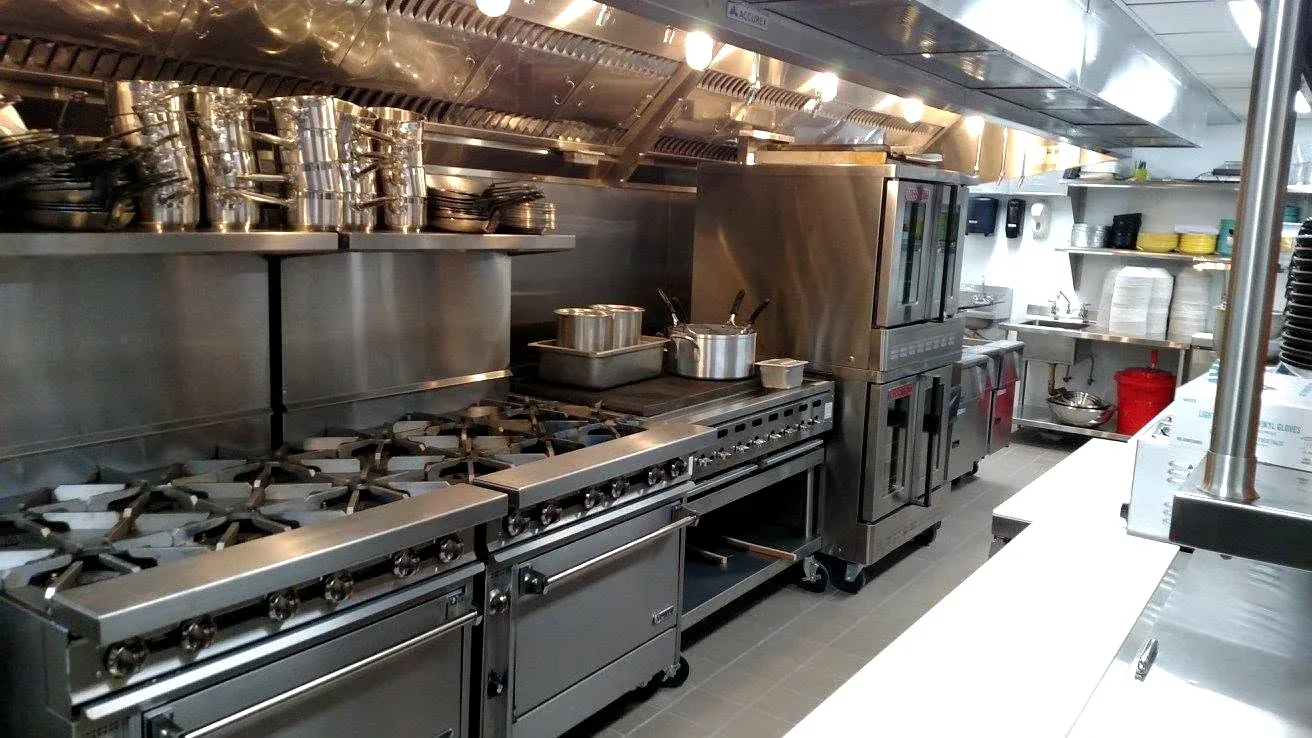
For a restaurant, the expensive part of a plumbing problem is almost never the repair; it is the closed service around it. A backed-up dish pit at seven on a Friday, a hand sink that fails an inspection, a water heater that quits before brunch, each of these costs a shift, not just a service call. That reality shapes how restaurant plumbing has to be done: the disruptive work scheduled for off-hours wherever possible, and the predictable failures moved onto a maintenance schedule so they never reach the emergency stage.
We plan the work around your service, doing the disruptive part when the kitchen is closed and keeping the grease lines, hot water, and fixtures ahead of failure on an interval rather than reacting to breakdowns. Prime Plumbing works out of 271 Salem Street in Woburn and holds Massachusetts plumbing license 17347, and does gas work to 248 CMR with the required permits. To set up restaurant plumbing service, contact us or call (617) 354-4545. For a full-kitchen program that also covers the shared systems, it folds into scheduled commercial maintenance.
Before you call
Tell us your kitchen's setup and what is giving you trouble, and we can scope the work around your service hours.
Because they carry grease and food volume a home never approaches. Grease pours down warm and hardens on the pipe wall as it cools, narrowing the line until a service rush finally blocks it. The lasting fix is keeping the line clear on a jetting schedule before it backs up, rather than clearing it after, and keeping the grease interceptor in the picture, since a neglected one backs the kitchen up too.
Yes. A commercial kitchen needs hot water that recovers fast enough to keep the dish pit and prep sinks supplied through a rush, which means a water heater sized for real commercial demand, not a residential unit pressed into service. We size the hot water to how your kitchen actually uses it, so it keeps up when the kitchen is busiest rather than running out mid-service.
Yes. A new fryer, range, or other cook-line equipment needs a properly sized, permitted gas line done to the Massachusetts state code. Because the same licensed team handles the gas along with the drains, fixtures, and hot water, a kitchen change that touches gas and plumbing at once stays with one contractor instead of becoming a scheduling puzzle across trades.
Yes, and it is how we plan restaurant work. The disruptive part is scheduled for off-hours wherever the job allows, so the kitchen is ready before you open. For a restaurant the closed service costs far more than the repair, so keeping you serving is the whole point of planning the work around your hours rather than reacting to breakdowns mid-shift.
Yes, more than it looks. Beyond the inconvenience, a required hand sink out of service is a health-code problem that can affect an inspection, not just daily work. We treat fixture failures in a kitchen as time-sensitive and repair or replace them promptly, and on a maintenance schedule we service the pre-rinse and hand-sink fixtures before they fail during service in the first place.
Yes, and for most kitchens it pays for itself. A schedule keeps the grease lines jetted, the hot water and fixtures ahead of failure, and the interceptor serviced, all moved onto a calendar you control rather than a run of emergencies. A planned interval costs a fraction of the emergency callouts and lost services it prevents, and it folds into a broader commercial maintenance program if you want the whole property covered.
Ready when you are
Tell us your setup and what is giving you trouble. Schedule online or call our Woburn team at (617) 354-4545, and we will work around your service.