
Sized to your home
We size to how your household actually uses hot water, on recovery and first-hour delivery, rather than just matching the label on the failed unit and installing the same shortfall again.
Woburn, MA · Residential + Commercial
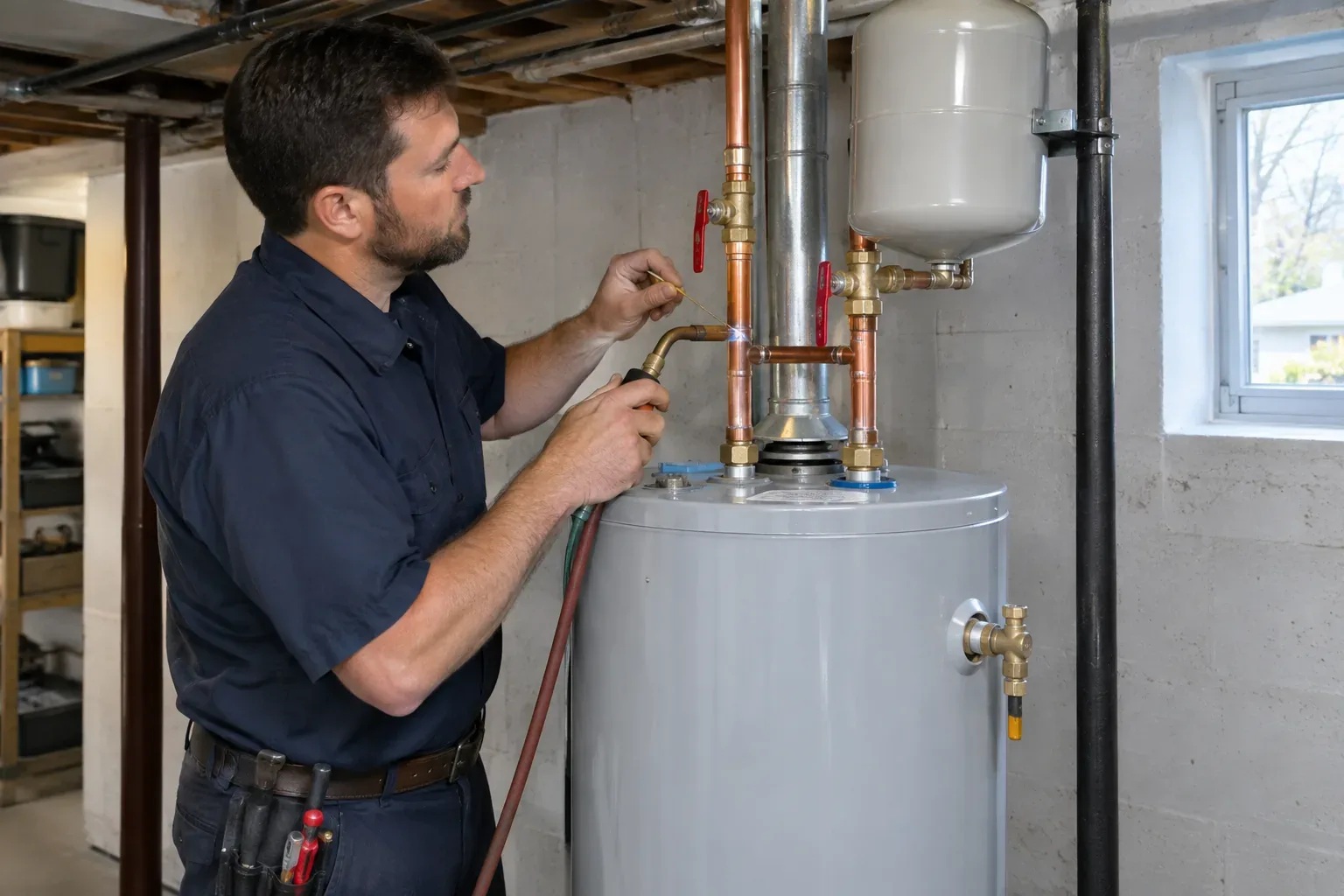
When a water heater has to be replaced, the install is what determines whether the new one works properly and safely for the next decade: the right size, correct venting, a code-compliant expansion tank, and a clean gas or electric hookup. Prime Plumbing sizes, permits, and installs tank and tankless water heaters across Woburn and Greater Boston, and hauls the old unit away. Call (617) 354-4545.
Three things a good install gets right
The unit matters less than how it is sized, connected, and inspected. Here is what separates a correct install from a rushed one.
We size to how your household actually uses hot water, on recovery and first-hour delivery, rather than just matching the label on the failed unit and installing the same shortfall again.
A thermal expansion tank, a correctly fitted relief valve and discharge, venting matched to the new unit, and a permit and inspection. The safety devices only work if they are installed right.
A tankless unit pulls a large gas load the moment it fires. Because we do the gas work ourselves, we confirm the line and meter can carry it before the install, not after it underperforms.
Two decisions that shape the whole job
The moment a heater fails is the one chance to fix what never quite worked, and to bring the whole setup up to current code.
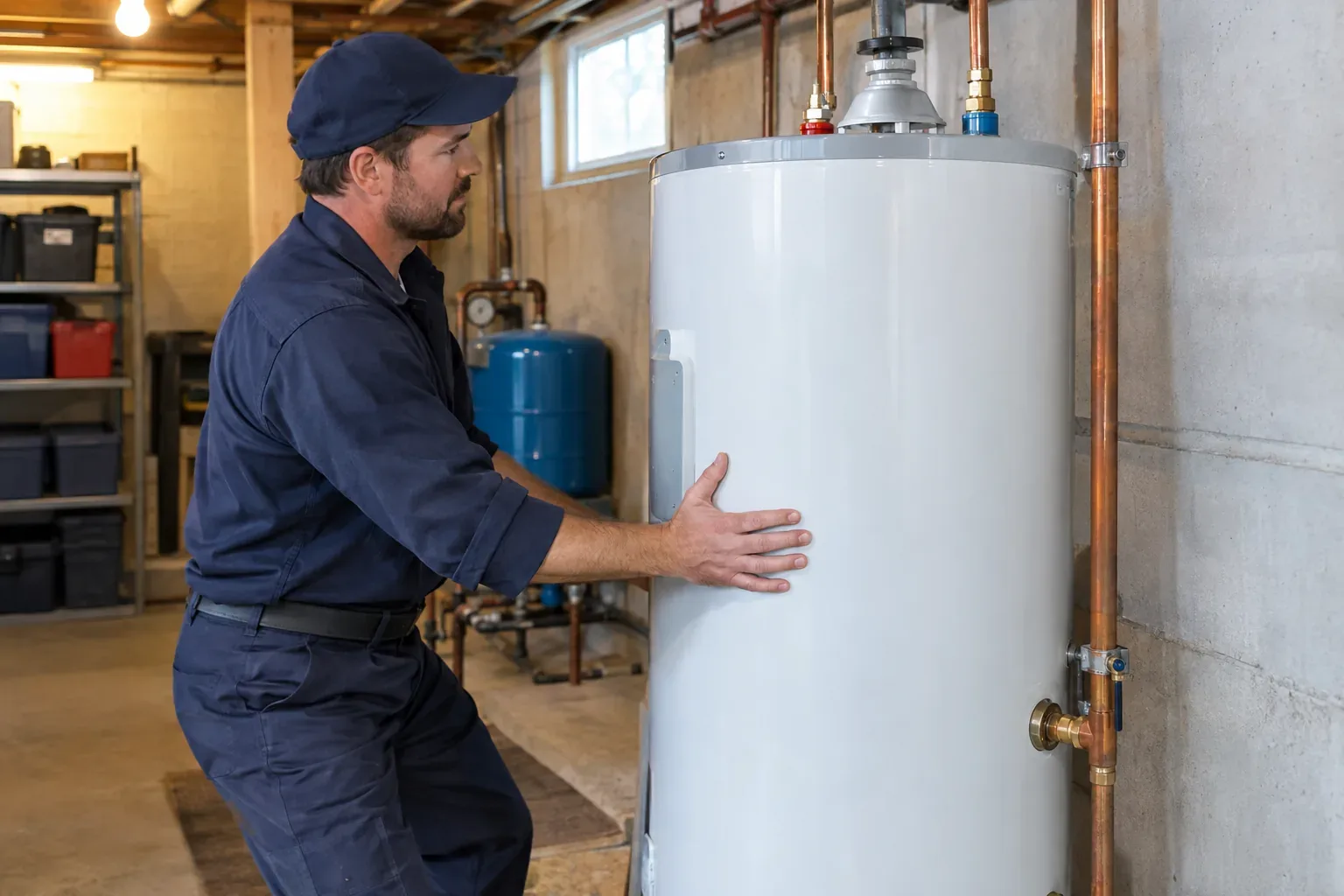
The easy move when a heater fails is to put back exactly what was there, and sometimes a like-for-like swap is genuinely the right call. But if the old tank ran out of hot water when the household grew, or two showers could never run at once, matching it just installs the same shortfall again. We size to how your household actually uses hot water rather than to the label on the failed unit.
The same decision point opens the tank-versus-tankless question honestly. A tight utility closet might be better served by a wall-mounted tankless that frees the floor; a large household running back-to-back showers may want a high-recovery tank. Our water heaters page walks through that trade-off in full.

A water heater is not just set in place and connected; a proper installation brings the whole setup up to current code, and that is where a rushed or unpermitted job cuts corners you cannot see. Because a replacement in Massachusetts is permitted, inspected work, we pull the permit and coordinate the inspection, so what gets installed is work that passed rather than work nobody checked.
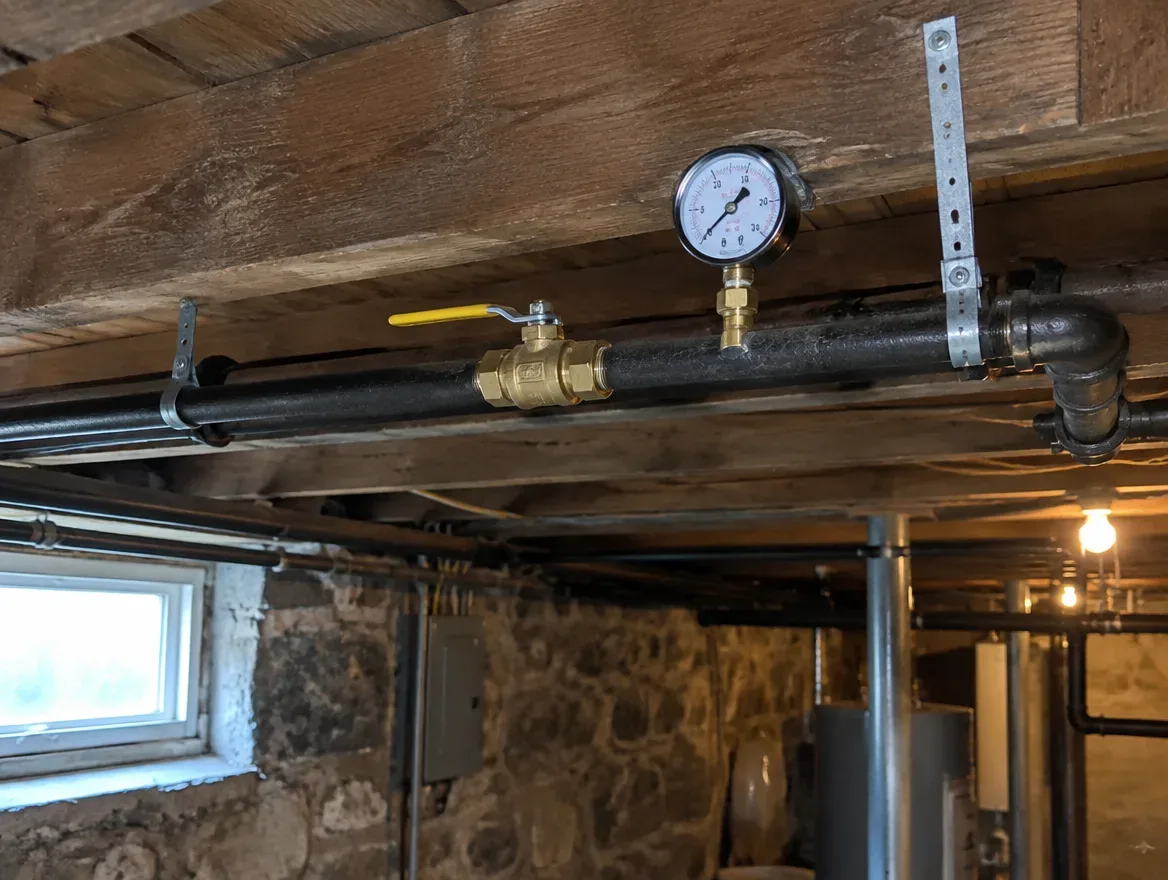
The most common reason a new water heater, especially a tankless one, underperforms has nothing to do with the heater. It is the gas supply. A tankless unit pulls a large gas load the instant it fires, far more than the old tank did, and the existing gas line and meter have to carry that load on top of everything else in the house on the coldest night of the year. A tankless heater bolted onto an undersized line will underperform or nuisance-fault, and no amount of adjusting the unit fixes a supply that cannot deliver the gas.
Because we do the gas work ourselves, we confirm the line and meter capacity before the install and upsize the supply when the conversion needs it, to the state code (248 CMR) with the required permit. That means a tankless conversion is one job with one team, not a water heater install that stalls waiting on a separate gas fitter. Our gas piping page covers that side of the work.
What to expect
Where the situation allows, we handle the replacement start to finish in one visit.
Tank or tankless, gas or electric, sized to how your home actually uses hot water. We lay out the trade-offs for your house rather than pushing the priciest option.
The expansion tank, relief protection, and venting the code requires, plus confirmed gas capacity for a tankless conversion. We pull the permit and coordinate the inspection.
We drain, disconnect, and haul away the old heater, and clean up the connections so the new unit sits on sound fittings. For a tank that failed and flooded, we move fast to get hot water back.
From our customers
Outstanding service, top-of-the-line team that installed our new boiler, kind gentlemen who answered every question we had, took their time in explaining how to use the new system. Would have them back anytime!!!
Mike and Cam installed our new dishwasher. Their manner was courteous and professional. I am happy with their service and recommend them.

Prime Plumbing works out of 271 Salem Street in Woburn, near the I-93 and Route 128 interchange, central to the homes and businesses we serve across Greater Boston. The company is licensed and insured, holds Massachusetts plumbing license 17347, and does gas work to the state code (248 CMR) with the required permits.
To plan a water heater replacement or a tankless conversion, contact us or call (617) 354-4545. If a failed heater is actively flooding right now, treat it as an emergency and shut the water to the tank if you safely can.
Before you call
Telling us the current unit's size and fuel type, and whether you are considering tankless, helps us scope the replacement.
Not automatically. A replacement is the one chance to fix a heater that never kept up. If the old tank ran out during busy mornings or could not handle two showers at once, matching it installs the same shortfall again. We size to how your household actually uses hot water, based on recovery and first-hour delivery, rather than simply copying the label on the failed unit.
Yes. A water heater replacement is permitted, inspected work in Massachusetts, and for good reason: it involves gas or electrical connections, venting, and safety devices that the inspection confirms are correct. We pull the permit and coordinate the inspection as part of the job, so what gets installed is work that passed rather than an unpermitted swap nobody checked.
An expansion tank gives water somewhere to go as it expands when heated, instead of spiking the pressure in a closed plumbing system and stressing the tank and relief valve. On most modern systems the code requires one, and a missing or waterlogged expansion tank is a common cause of a relief valve that keeps releasing. We fit one where the code calls for it as part of a correct install.
Yes. The main thing a tankless conversion needs beyond the unit is confirmed gas capacity, because a tankless heater pulls a large gas load and the existing line and meter often need to be upsized. Because we do the gas work ourselves to the state code, the conversion is one job with one team rather than a stalled install waiting on a separate gas fitter.
Yes. We drain and disconnect the old unit, haul it away, and clean up the connections so the new heater sits on sound fittings and working shutoffs. You should not be left to dispose of a heavy old tank yourself. Where a heater failed and flooded, we can move quickly to get hot water back and limit the water damage.
Often the same day or next, depending on the unit and the situation. A straightforward tank swap is usually a single visit; a tankless conversion that needs the gas line upsized takes a bit more, but we handle it as one coordinated job. If a failed heater is actively flooding, treat it as an emergency and shut off the water to the tank if you safely can.
Ready when you are
Tell us the current unit's size and fuel, and whether you are weighing tankless. Schedule online or call our Woburn team at (617) 354-4545.