
Sized to whole-house demand
Every appliance draws a set BTU load, and the line off the meter has to supply all of them at once on the coldest night. We add up the demand and confirm the meter and supply can carry it before we run pipe.

Woburn, MA · Residential + Commercial
Running a new gas line is mostly a sizing problem: the pipe from the meter has to carry every appliance's demand at once on the coldest night of the year. Prime Plumbing installs new gas piping for homes and businesses across Woburn and Greater Boston, sized to the whole system, run to Massachusetts code, and pressure-tested before anything is connected. Call (617) 354-4545.
What makes a gas line sound
The part that decides whether a line works for the next twenty years is invisible once the walls close. Here is what we get right first.
Every appliance draws a set BTU load, and the line off the meter has to supply all of them at once on the coldest night. We add up the demand and confirm the meter and supply can carry it before we run pipe.
Correct material and diameter for the run and load, supported along its length, with a drip leg and an accessible shutoff, and protected where it passes through framing so it stays sound and serviceable.
A new line is licensed, permitted, inspected work. We cap and pressure-test the run before anything is connected, so the whole line proves tight, not just the fittings you can see.
Sizing first, then the run
Getting the math right up front is what separates a clean install from a string of nuisance problems no one can quite explain.
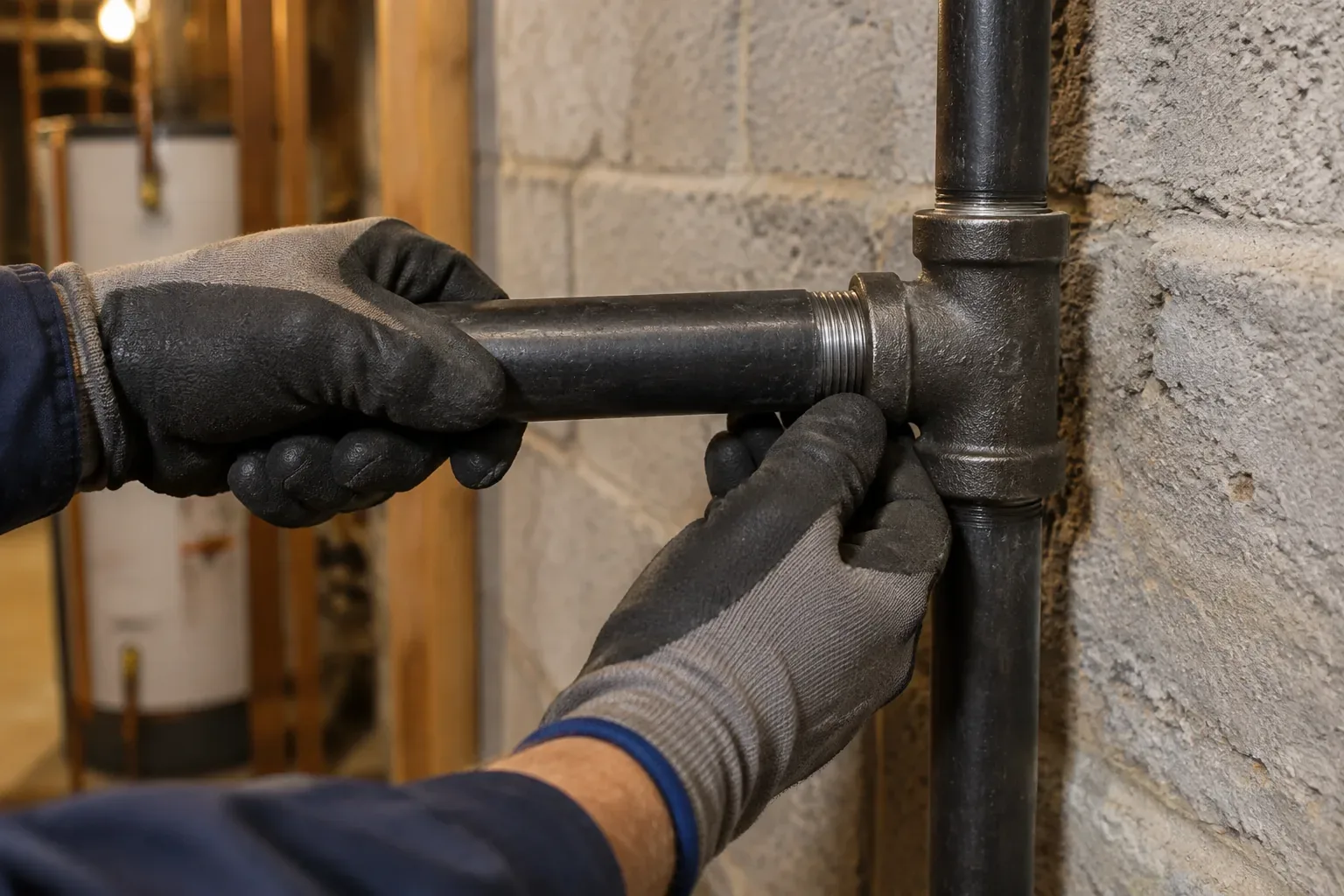
Every gas appliance draws a specific load in BTUs, and the line coming off the meter has to supply all of them running together at peak demand, a January night with the boiler, the water heater, and the range all calling for gas at once. A new branch teed onto a trunk already near its limit will starve something, and the symptom shows up later as an appliance that cannot reach temperature or a pilot that keeps dropping out.
So we start by adding up the existing demand plus whatever you are putting in, and confirming the line from the meter, and the meter itself, can carry it. Sometimes it is a straightforward branch; sometimes it means a properly sized trunk or a utility meter upsize.
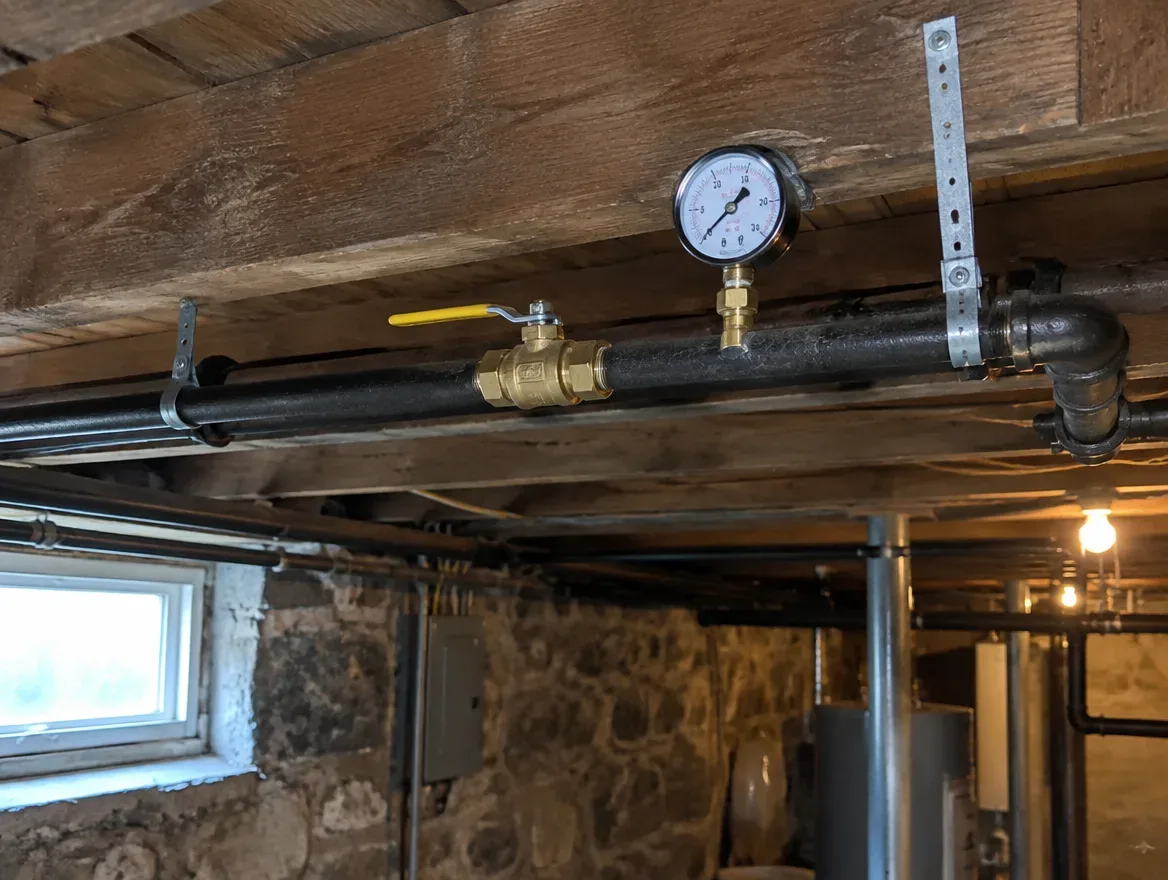
The piping has to be the correct material and diameter for the run and the load, supported so it does not sag or stress a joint, fitted with a drip leg where the code calls for one, and given an accessible shutoff. Black iron pipe and modern flexible gas tubing each have their place, and a good install uses the right one rather than whatever is fastest to run.
We route new piping so it is sized, supported, and reachable, because the goal is an installation that is safe to live with and simple to service later.
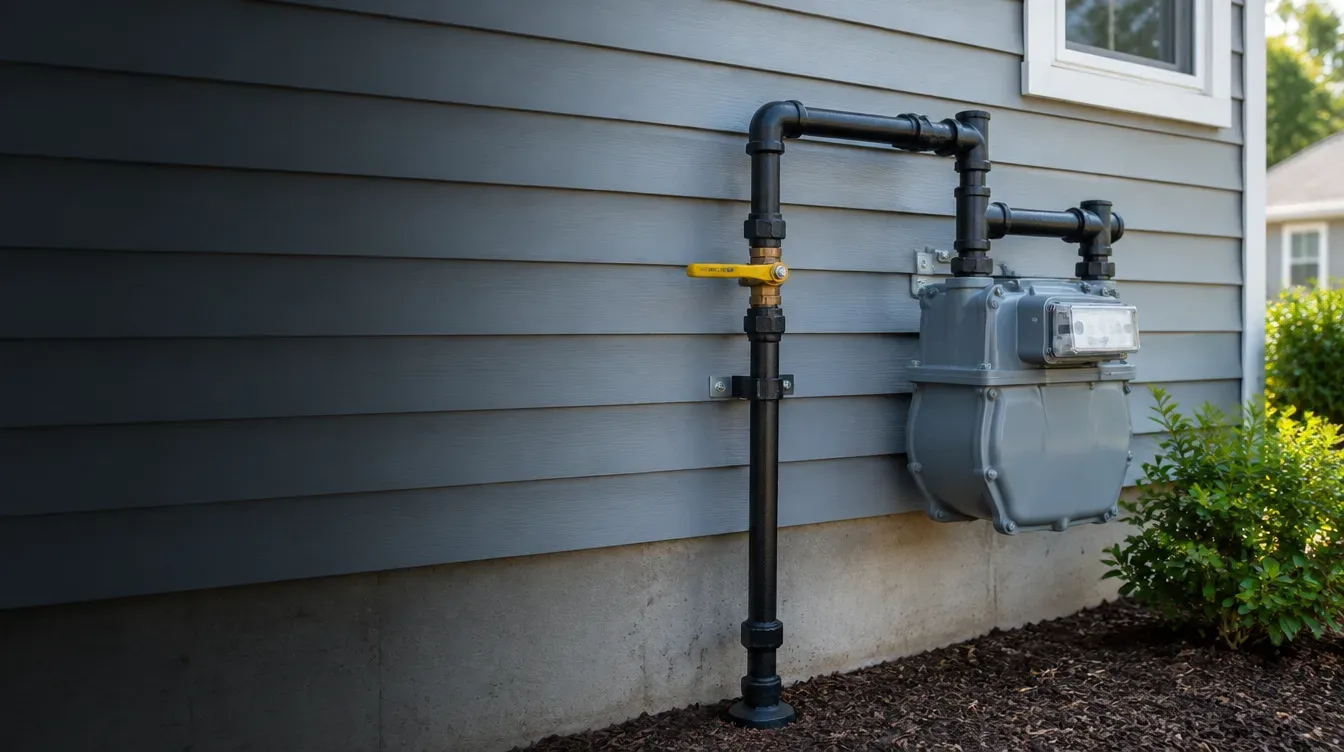
In Massachusetts a new gas line is licensed, permitted, inspected work, and the pressure test is the moment the whole installation proves itself. Before any appliance is connected, we cap the new piping and put it under test pressure to confirm it holds with no drop, so you know the entire run is tight and not just the fittings you can see. The permit and the inspection are the outside confirmation that the line was sized and installed correctly.
That paper trail is worth more than it looks. When you sell the house or file an insurance claim, a permitted, inspected gas installation is something you can point to; an unpermitted line run by someone unlicensed can quietly undo both. We pull the permit, do the work to 248 CMR, pressure-test, and coordinate the inspection as part of the price of doing it right, not as add-ons.
What to expect
Where the new line feeds our own water heater, boiler, or generator work, it is one coordinated job.
We add the whole-house load plus what you are adding and confirm the meter and supply can carry it at peak, so nothing starves later.
The correct pipe and diameter, supported along its length, with a drip leg and accessible shutoff, routed and protected through framing.
We pull the permit, pressure-test the run before anything is connected, and coordinate the inspection, all to 248 CMR.
From our customers
Polite, professional & clean. I often work with Jeff: very knowledgeable and motivated. Definitely recommend Prime Plumbing.
Excellent reputation and flexibility to meet my company's needs.

A new gas line almost always exists to feed something, and often that something is also our work. A new gas water heater or boiler needs the gas line, the water or venting connections, and the unit coordinated together, and one licensed team means the supply is sized for the appliance and installed in the same visit rather than handed between trades. For the two most demanding new loads, see our appliance gas lines and generator gas lines pages, and if an existing line is failing rather than being added to, our gas line repair page covers that.
Prime Plumbing works out of 271 Salem Street in Woburn and holds Massachusetts plumbing license 17347, performing every gas job to 248 CMR with the permits and inspections the state requires. To plan a new gas line, contact us or call (617) 354-4545.
Before you call
Tell us what the line will feed and what is already connected, and we can size it correctly from the start.
By adding up the total load. Every appliance draws a set number of BTUs, and the line from the meter has to supply all of them running at once on the coldest day, not just the new one. We calculate the existing demand plus whatever you are adding and confirm the supply and meter can carry it. That whole-system sizing is what keeps a new line from starving an appliance later.
Yes, in nearly all cases. Massachusetts requires new gas piping to be installed by a licensed technician under a permit, with the finished work inspected. We pull the permit, install to 248 CMR, pressure-test the run before any appliance is connected, and coordinate the inspection. That permitted, inspected paper trail also matters when you sell the home or file an insurance claim.
Before connecting any appliance, we cap the new piping and put it under test pressure to confirm it holds with no drop. That proves the entire run is tight, not just the fittings you can see. It is the step that confirms a new installation is sound end to end, and it is a required part of doing the work correctly, not an optional extra.
Often yes, but it may mean more than a simple branch. If the existing supply or meter cannot carry the added load, the fix can be a properly sized new trunk from the meter, or having the utility upsize the meter. We identify that during the load calculation rather than discovering it after an install underperforms, so the solution is planned in from the start.
Both have their place, and the right choice depends on the run and the load. We use black iron and modern flexible gas tubing where each is the sound option, rather than defaulting to whatever is fastest to install. The line is also supported along its length, fitted with a drip leg and shutoff where required, and routed to stay accessible for future service.
Yes, and a remodel is the ideal time, because the walls are open and a new branch can be run and sized without opening finished surfaces later. We coordinate the gas work with the rest of the project so it happens at the right stage. Because we also handle plumbing and heating, a remodel that touches gas, water, and venting stays with one team.
Ready when you are
Tell us what it will feed and what is already connected. Schedule online or call our Woburn team at (617) 354-4545, and we will size it right.