One shared boiler and hot water
A single home with a dead water heater has one household without hot water; an apartment building on one shared system has every tenant calling before noon. It is the piece most worth servicing ahead of the season.
Woburn, MA · Commercial
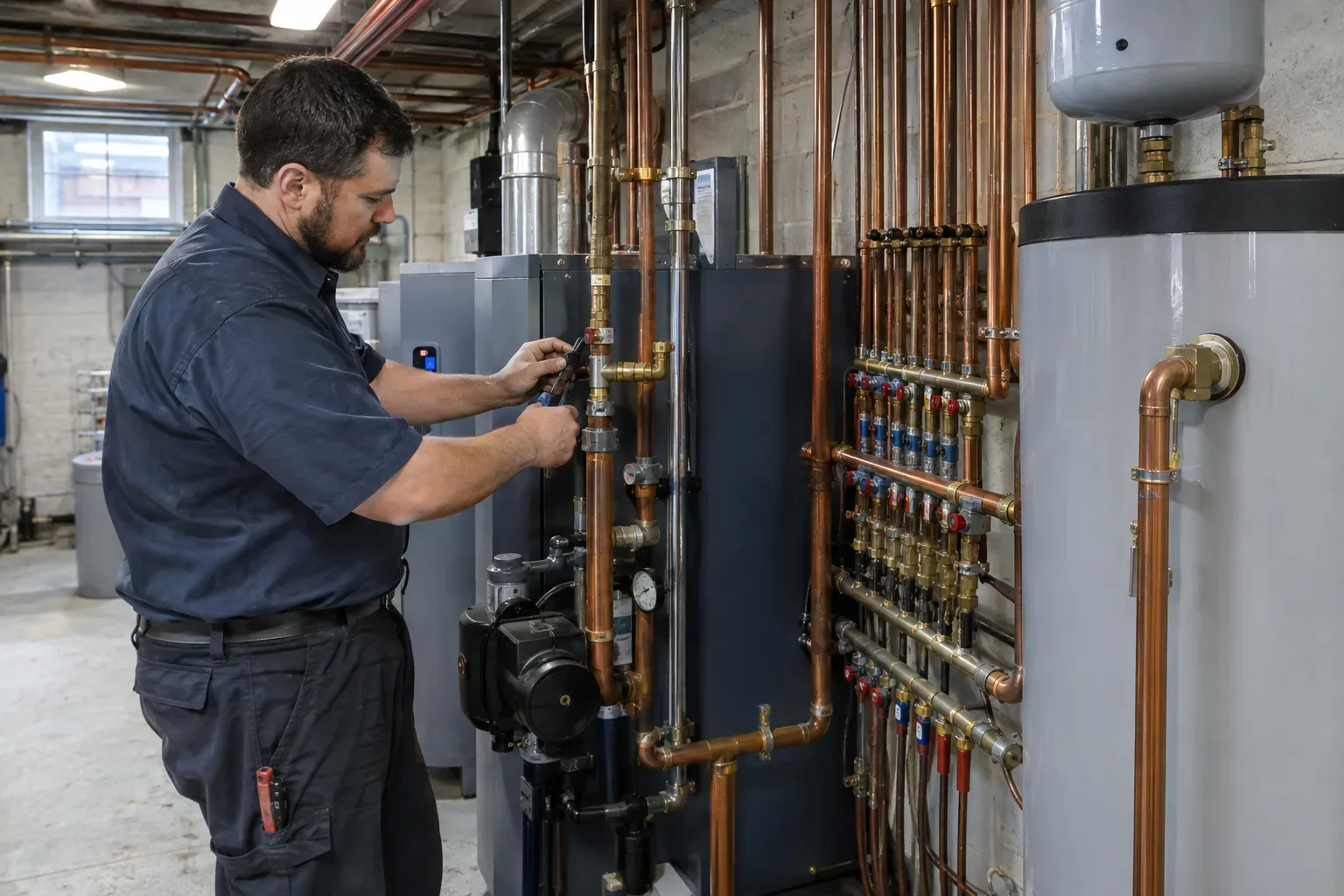
Two- and three-family homes, apartment buildings, and mixed-use blocks share plumbing in ways single homes do not: one boiler heats everyone, one drain stack serves the whole column, and a failure low in the building is felt in every unit. Prime Plumbing works these buildings as systems across Woburn and Greater Boston, staging the work so the fewest tenants lose water or heat for the shortest time. Call (617) 354-4545.
In a multi-family building, systems fail together
The defining fact of a multi-family building is that the plumbing is shared, and shared systems fail for everyone at once, not one household at a time.
A single home with a dead water heater has one household without hot water; an apartment building on one shared system has every tenant calling before noon. It is the piece most worth servicing ahead of the season.
A main drain problem low in the building does not back up one fixture, it backs up the whole stack, so a blockage in the basement shows up in a third-floor tub.
A shared-line repair can require isolating a riser that serves several units. Done without a plan, more tenants lose service, for longer, than the job actually required.
The shared parts of the building
These buildings are single plumbing systems that serve many units, and a problem in the shared part is a building-wide event. Working them well starts there.
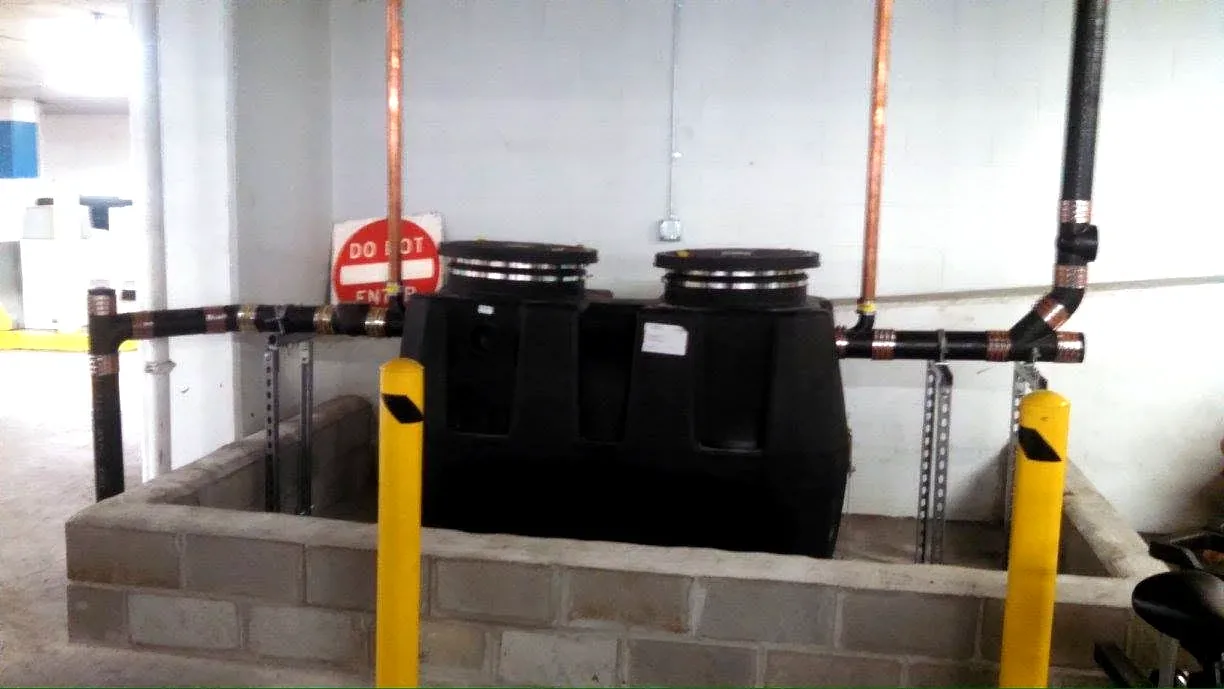
The main drain stack carries the whole building and is the line whose blockage backs up the most units. A blockage low in the stack does not stay a basement problem; it climbs, showing up as a backup two or three floors above where it actually sits.
Working these buildings well means knowing how the stack runs and which units a given repair affects, so a shared-drain problem is diagnosed as the building-wide event it is rather than chased one fixture at a time. This ties into our drain cleaning work at a building's scale.
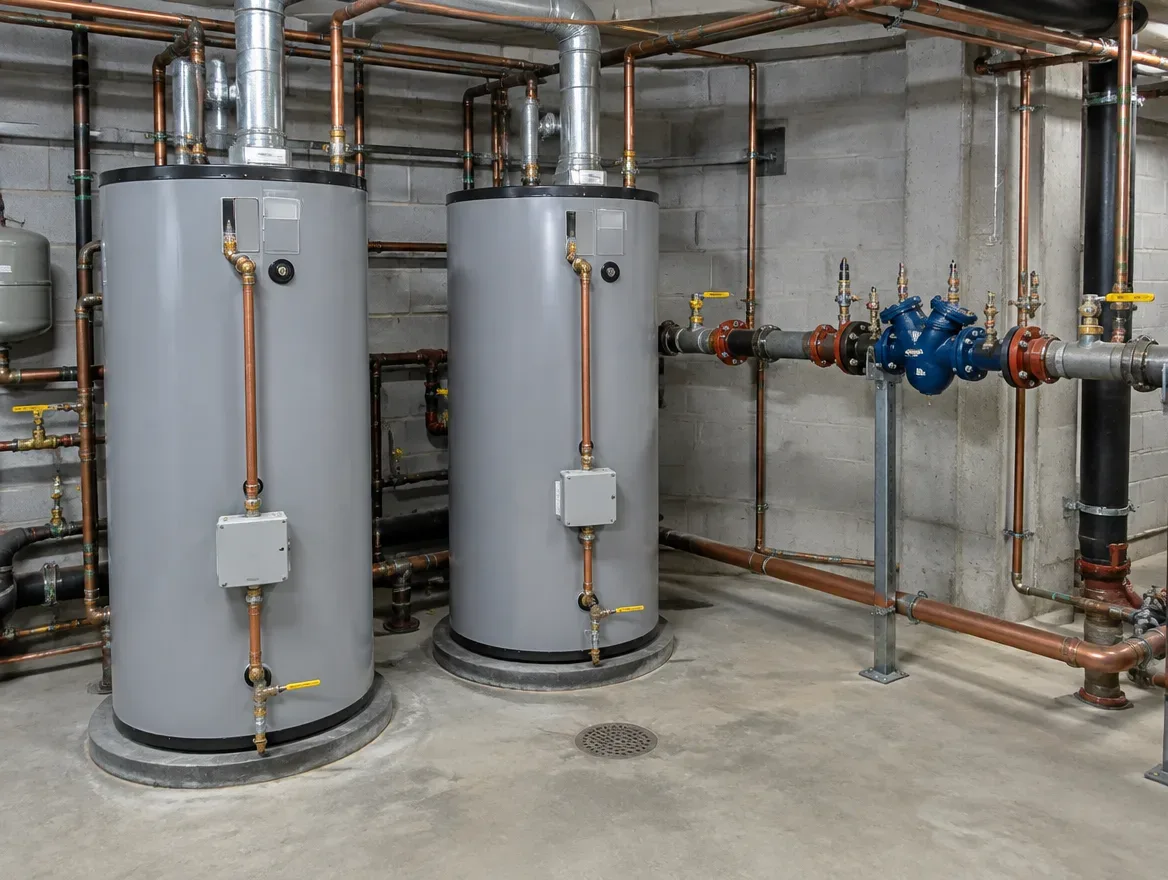
The heart of a multi-family building's plumbing is its shared equipment. The shared boiler or hot-water system is the big one: when it goes, everyone is affected, so it is worth servicing ahead of the heating season rather than waiting for a January failure. Backflow protection, required by the water authority on many multi-unit and mixed-use buildings, has to be tested and documented on schedule to keep the building compliant.
We handle all of it as the connected system it is, tying into our heating and water heater work, so a problem that crosses systems stays with one contractor who understands how the building fits together.
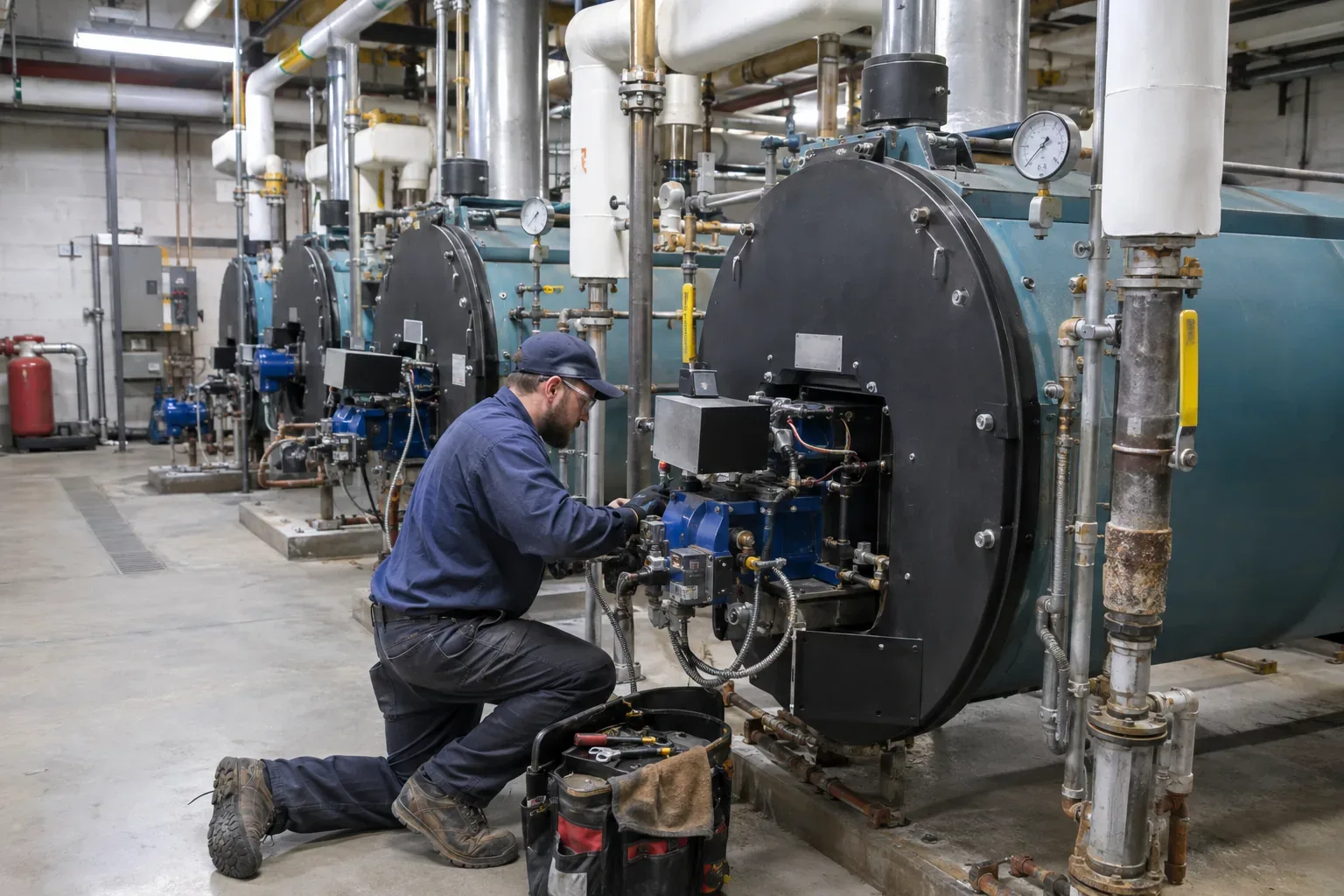
When the plumbing is shared, how the work is staged matters as much as the repair itself, because the wrong approach means shutting water or heat to units that did not need to lose it. A repair to a shared line can require isolating a riser that serves several units, and doing that without a plan means more tenants without service for longer than necessary. So part of working these buildings is figuring out, before the water goes off, exactly which valves isolate the smallest necessary section, when to schedule the shutdown to inconvenience the fewest people, and how to restore service quickly.
We plan the sequence deliberately: identify what has to come off, notify and coordinate with the affected tenants, do the work in the tightest window, and get everyone back on. For a shared-system repair that cannot be avoided, the difference between a well-staged job and a careless one is measured in how many tenants were affected and for how long, and that is exactly what we work to minimize.
What to expect
We work your building as one system and stage the disruptive parts to affect the fewest tenants.
Identifying which valves take off only the units that must lose service, so the rest of the building keeps its water and heat.
Notifying and scheduling with the affected units before the water goes off, not after, and working in the tightest window.
Servicing the shared boiler, hot water, and stack before they fail, and keeping backflow testing on the compliance calendar.
From our customers
Great prices and good work. As plumbers go these days it is hard to find good labor that isn't doing large new builds. Rich and Rob are great at taking care of your problem for you. I've used them on rentals almost exclusively.
Excellent reputation and flexibility to meet my company's needs.

Many of the multi-unit buildings we serve are mixed-use: apartments above a storefront or restaurant, common along Route 128 and in the neighborhoods closer to the city. These add a wrinkle, the commercial space below and the residential units above share some systems and have very different demands, and a plumber who handles only one half leaves the coordination to someone else. We handle the storefront and the apartments with the same team, which matters when a problem in the shared plumbing affects both.
Across all of these buildings, the recurring value is a plumber who knows the building, its shutoffs, its shared equipment, how its stack runs, so the next call does not start from scratch. Prime Plumbing works out of 271 Salem Street in Woburn and holds Massachusetts plumbing license 17347, and does gas work to 248 CMR with the required permits. To set up service for a multi-family or mixed-use building, contact us or call (617) 354-4545. For those running several buildings, this connects to our property management service.
Before you call
Tell us the building's size and whether it has shared heating or hot water, and we can scope the work.
Because the plumbing is shared. One boiler or hot-water system serves every unit, so its failure affects everyone at once, and one drain stack carries the whole column, so a blockage low in the building backs up the units above. Multi-family buildings are single plumbing systems serving many units, not separate apartments, which is why a shared-system problem is a building-wide event rather than one tenant's issue.
By staging the work. Before the water goes off, we identify which valves isolate the smallest necessary section, so units that do not need to lose service keep it, schedule the shutdown to affect the fewest tenants for the shortest time, and coordinate with the affected tenants first. The difference between a well-staged job and a careless one is measured in how many tenants were affected and for how long.
Yes, and it is the equipment most worth staying ahead of, because when a shared boiler or hot-water system fails, every unit is affected. We service it, ideally before the heating season rather than waiting for a January failure, as part of handling the building's plumbing, heating, and gas with one licensed team so a cross-system problem stays with one contractor.
Yes. Backflow protection is required by the water authority on many multi-unit and mixed-use buildings and has to be tested and documented on schedule to keep the building in compliance. We keep that testing on the building's compliance calendar alongside the rest of the shared-system work, so it is handled on time rather than missed until it becomes a problem.
Yes. Apartments above a storefront or restaurant share some systems while having very different demands, and we handle both the commercial space and the residential units with the same team. That matters when a problem in the shared plumbing affects both, because it stays with one contractor who understands the whole building rather than being split across trades.
Yes. For an owner or manager running multiple multi-family buildings, we provide one licensed team that gets to know each building, where its shutoffs and shared equipment are and how its stack runs, so calls do not start from scratch. That continuity connects to our broader property management service, which covers portfolio-wide response, tenant coordination, and documented work for budgeting.
Ready when you are
Tell us the building's size and whether it has shared heating or hot water. Schedule online or call our Woburn team at (617) 354-4545.