
Backups in the lowest drains
A basement floor drain or first-floor toilet that backs up is the classic sign, because a restricted main shows there first. A sewage smell around the property points the same way.
Woburn, MA · Residential + Commercial
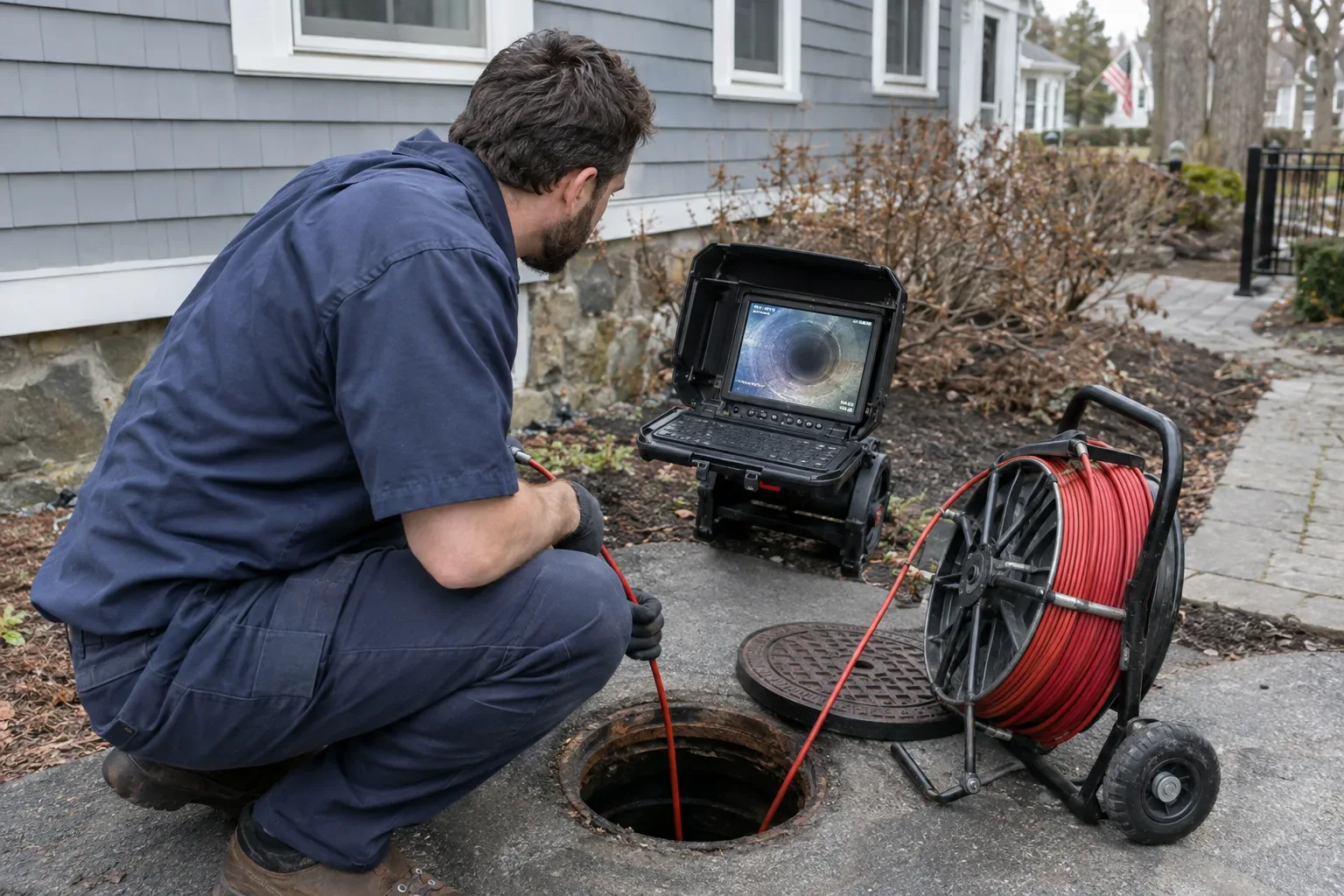
When the main line between the house and the street keeps backing up, the problem is the pipe itself, and cabling only buys time. Prime Plumbing cameras the sewer line to find exactly what is wrong, then repairs or replaces it, for homes and businesses across Woburn and Greater Boston. Call (617) 354-4545.
A main-line problem announces itself
A branch clog clears at the fixture and stays clear. A main-line problem clears when cabled and comes back, because the cause is still there. These are the signs.
A basement floor drain or first-floor toilet that backs up is the classic sign, because a restricted main shows there first. A sewage smell around the property points the same way.
Multiple fixtures gurgling or draining slowly together, or a toilet that bubbles when the washing machine drains, points at the shared main rather than any one fixture.
A line cabled repeatedly is telling you the pipe needs attention, not another cleaning. The cause, roots, a broken joint, or a collapse, is still there after the cable pulls out.
See it before you fix it
You cannot repair a sewer line correctly without seeing it, so every diagnosis starts with a camera, and the footage decides the fix.
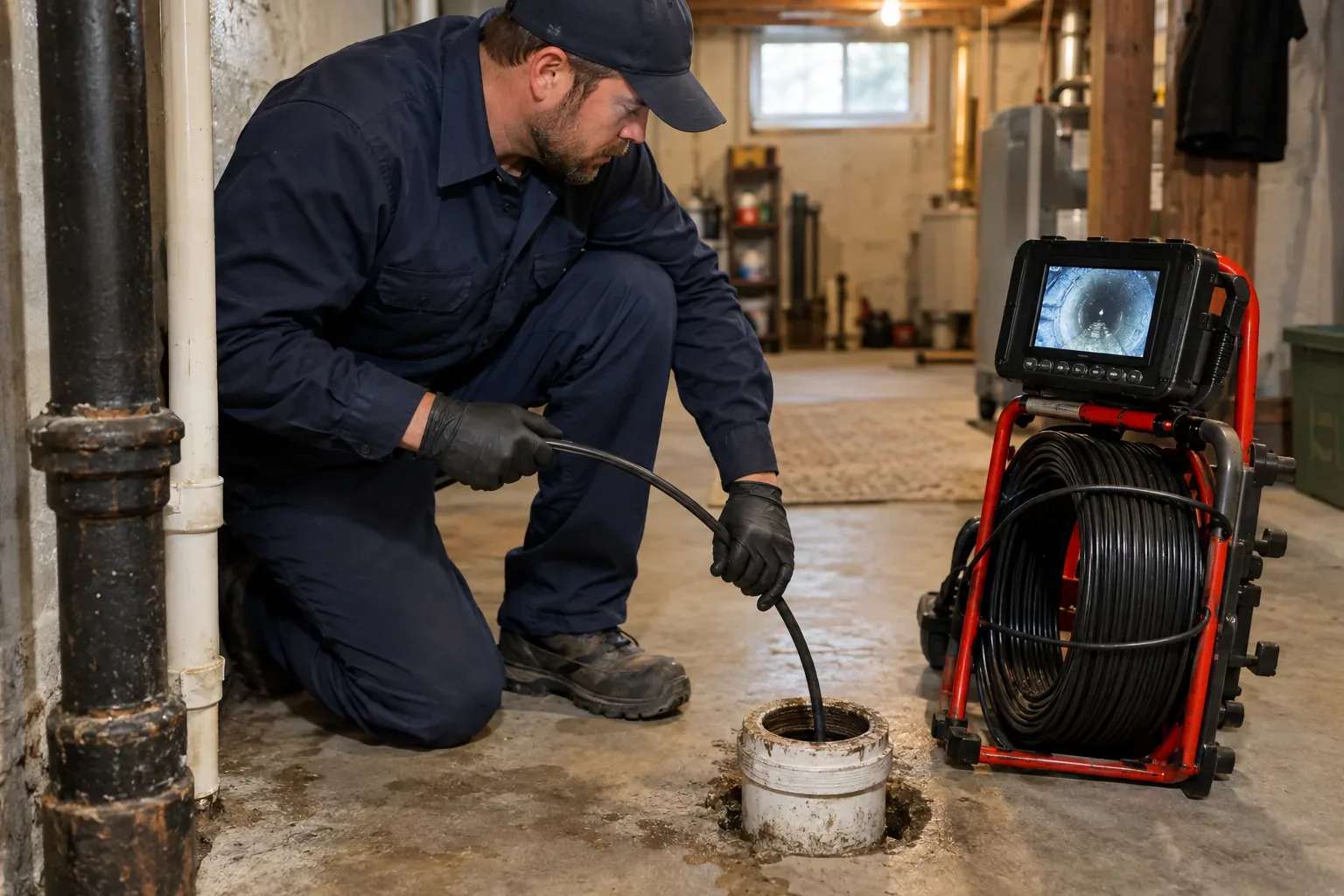
We feed a drain camera from the cleanout out toward the street and watch the screen together, and what it shows decides everything that follows: roots at a joint, a section that has cracked or collapsed, a low spot that holds standing water, or scale closing an old cast-iron pipe from the inside. The camera also locates the fault, how far out and how deep, which is what makes a targeted repair possible instead of digging blind.
That footage tells you honestly whether you are looking at a small spot repair or a full replacement, and it is something you can show an insurer or a buyer. We would rather spend the time to look than sell a repair the pipe may not need.

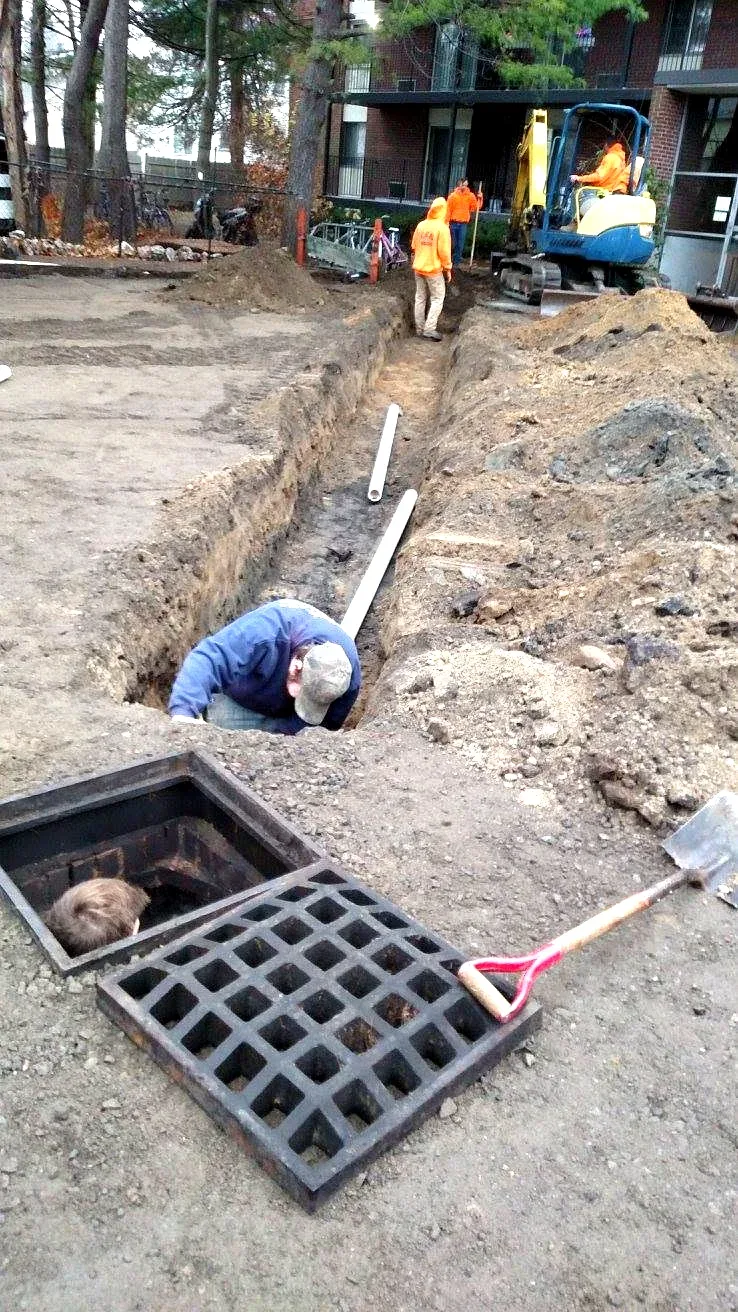
Once we know what the line needs, there is usually more than one way to fix it, and the right one depends on what the camera showed. A single failed joint or short broken section can sometimes be a spot repair, opening only where the fault is. Where a longer run is degraded but the pipe is still intact enough, trenchless methods can rehabilitate the line with far less digging. Where a line has genuinely collapsed, replacing the run is the honest, lasting fix.
We walk you through which options actually apply rather than presenting the most expensive one as the only one. A newer PVC line with one bad spot and a 1930s clay line failing for years call for different answers, and the point of the camera work is to match the fix to the pipe.
Much of the housing stock we serve was built when sewer lines were clay tile, early cast iron, or in some eras Orangeburg, and all three fail on a timeline that is now arriving. Clay joins in short sections that roots find and pry apart; the freeze-and-thaw cycle of New England ground shifts those joints further every winter. Cast iron scales inward until the channel narrows and catches waste. These are not defects; they are pipe reaching the end of a long life.
That history is why the same recurring backup means something different in a 1930s Winchester colonial than in a newer home on PVC. If your main has been cabled every spring for years, the honest conversation is not about another cleaning; it is about what the camera shows and what it will cost to stop the cycle, and we will have that conversation straight.
What to expect
We match the fix to the pipe rather than defaulting to the most expensive option.
We run the camera from the cleanout to identify the cause and pinpoint how far out and how deep it is, and show you the footage on the screen.
A spot repair, a trenchless rehabilitation, or a full replacement, with an honest read on which is the right value for your line, not the most expensive one.
Where a coordinated excavation or permit is involved, we handle it as part of the job, with the scope known and targeted before work begins.
From our customers
Great prices and good work. As plumbers go these days it is hard to find good labor that isn't doing large new builds. Rich and Rob are great at taking care of your problem for you. I've used them on rentals almost exclusively.
Polite, professional & clean. I often work with Jeff: very knowledgeable and motivated. Definitely recommend Prime Plumbing.
Prime Plumbing works out of 271 Salem Street in Woburn, near the I-93 and Route 128 interchange, central to the homes and businesses we serve across Greater Boston. The company is licensed and insured and holds Massachusetts plumbing license 17347. The starting point is always the camera diagnosis, so the scope of any dig is known and targeted before work begins rather than discovered along the way.
To have a recurring backup diagnosed properly, contact us or call (617) 354-4545. If sewage is backing up into the house right now, treat it as an emergency.
Before you call
Telling us how often the line backs up and which drains are affected helps us know whether it is a cleaning or a repair.
The tell is the pattern. A one-time clog in a single fixture is just a clog. Repeated backups in the lowest drains, several fixtures gurgling at once, a toilet bubbling when the washer drains, or a line that has been cabled more than once in a year point at the main sewer line. Those signs mean the pipe itself needs looking at, which is what the camera is for.
Because you cannot fix a sewer line correctly without seeing it. The camera shows whether the cause is roots, a cracked or collapsed section, a bellied low spot, or scale, and it locates the fault so a targeted repair is possible instead of digging blind. It also tells you honestly whether you need a small spot repair or a full replacement, and gives you footage to show an insurer or buyer.
Often, yes, depending on what the camera shows. A single failed joint can sometimes be a spot repair opening only where the fault is, and where a longer run is degraded but intact enough, trenchless methods can rehabilitate the line with far less digging. Where a line has truly collapsed, replacement is the lasting fix. We match the method to your pipe rather than defaulting to a full dig.
Roots return through the same cracked joints they entered, so cutting them out restores flow only until they regrow. If the camera shows heavy, recurring intrusion, the honest options are ongoing scheduled cleaning to manage it, or repairing the affected section so the roots have no way in. We show you the footage and explain which is the better value for your line rather than selling repeat cablings.
Older Greater Boston homes often have clay, early cast iron, or Orangeburg sewer lines, all of which fail on a timeline that is now arriving: clay joints shift and admit roots, cast iron scales inward. It does not mean automatic replacement, but a home of that era with recurring main-line backups is worth a camera inspection to see where the line actually stands before the next backup.
Yes. Where a repair or replacement involves excavation or a permit, we handle that as part of the job and coordinate it properly rather than leaving you to manage separate pieces. The starting point is always the camera diagnosis, so the scope of any dig is known and targeted before work begins rather than discovered along the way.
Ready when you are
Tell us how often the line backs up and which drains. Schedule online or call our Woburn team at (617) 354-4545, and we will camera it and give you the honest options.